
Your Website Might Be Blocking AI Without You Knowing
In any diagnosis we run, the first step is always this: can AI crawlers reach the page? Adjusting authority, source, or comparison structure is pointless if the site is blocked beforehand. Fixing these issues often opens up more opportunities than any text adjustment.
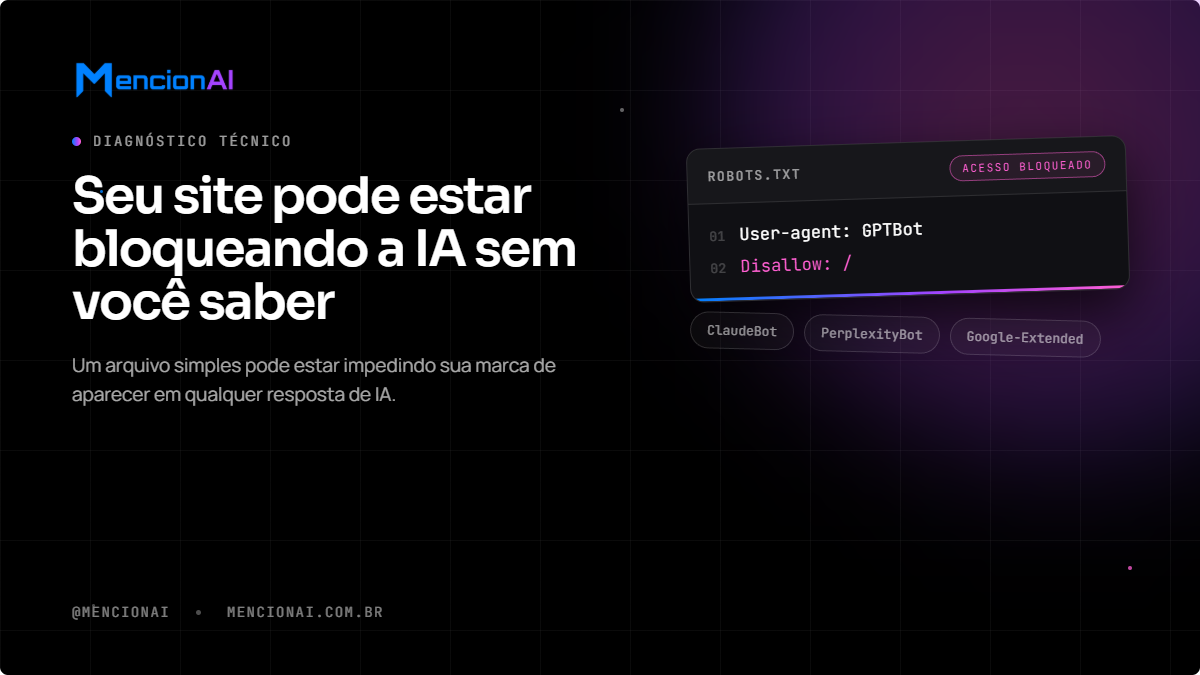
Before tweaking text, titles, or structure to perform better in AI responses, there's a more fundamental question that almost no one asks: can the AI robot even access your website? I see people investing weeks in content without checking this first.
Why Technical Access Comes Before Any Optimization
In any diagnosis we run, the first step is always this: can AI crawlers reach the page? Adjusting authority, source, or comparison structure is pointless if the site is blocked beforehand, whether by a robots.txt rule, firewall, or a forgotten noindex configuration. Fixing these issues often opens up more opportunities than any text adjustment.
The Most Common Barriers That Block AI Robots
A poorly configured robots.txt is the most frequent mistake. Many sites block generic user-agents without realizing that this includes specific AI crawlers like GPTBot, ClaudeBot, or PerplexityBot. Additionally, a forgotten noindex header, overly aggressive bot protection in the WAF, outdated sitemaps, and pages that only load with heavy JavaScript without any server-rendered version also hinder access.
A Quick Way to Check Yourself
Open "yourdomain.com/robots.txt" in your browser now. Look for a "User-agent" with the name of an AI robot followed by "Disallow: /". If you see this, that robot is prohibited from reading the entire site, with no visible warning anywhere. It’s also worth checking the server log to see if these crawlers are indeed knocking on the door and being blocked.
How to Resolve It Without Compromising Security
You can allow trusted AI user-agents in robots.txt without sacrificing protection against malicious traffic; these are separate rules. Update the sitemap, ensure that the main page has a server-rendered version, and then monitor regularly, because firewall and CDN configurations change over time and may block access again without anyone noticing.
How MencionAI Fits In
Fixing this type of blockage alone doesn’t guarantee anything, but it unlocks the rest. Without access, no content optimization stands a chance of being seen. That’s why we included this type of technical check right at the beginning of MencionAI’s diagnosis, before any content suggestions, precisely to avoid making someone waste time optimizing a site that AI can’t even read.
If you want to see if this is happening with your brand, just schedule a demo.
Pedro, CMO of MencionAI
How to apply this in 30 days (Brazil-first)
Brazilian buyers mix PT-BR and English prompts. Treat Brazil as the primary market even when you also ship English pages.
- Baseline 10 buyer-intent prompts in Portuguese and English across ChatGPT, Gemini, Claude, Perplexity, Grok, and DeepSeek.
- Ship one comparison page and one FAQ hub with stable heading IDs, using buyer language such as “melhor X para PME no Brasil”.
- Publish /llms.txt and allow documented AI crawlers only — do not invent tokens for Grok or DeepSeek.
- Re-scan weekly and map citation gaps to the next content change.
MencionAI tracks those models for marketing and growth teams in Brazil so you can see which answers cite you after each ship.
Don't stay invisible to the future — be seen today
Monitor how your brand shows up in ChatGPT, Claude, and Gemini. Start tracking AI citations and improve your generative visibility.