Why MencionAI Tests Your Brand in AIs Without Logging In
MencionAI Blog Pedro Vianna Quintian
MencionAI Blog Oct 21, 2026 · 4 min read
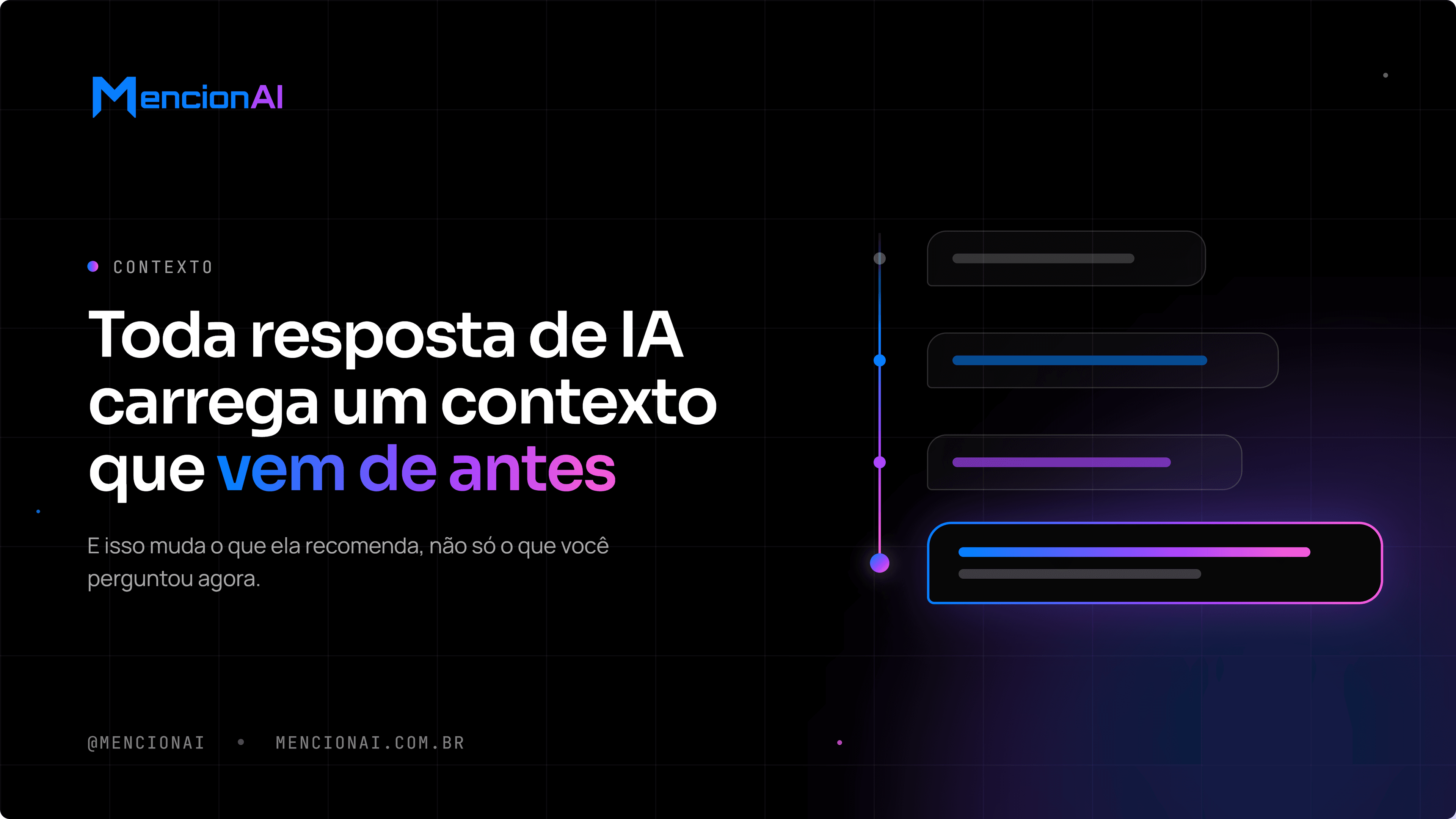
MencionAI tests your brand's presence in AI responses without logging in because a logged-in account carries memory of previous conversations, which alters the response given by the AI. To understand this bias, it’s worth starting with the most obvious type of context: what happens within a single conversation.
Quick answer
No. SEO ranks links on a results page. GEO measures whether your brand is cited inside AI answers on ChatGPT, Gemini, Claude, Perplexity, Grok, and DeepSeek.
Summary
- There is a context that comes from before that conversation starts.
- MencionAI tests your brand's presence in AI responses without logging in and without account history.
- If the AI is crossing specific criteria before making a recommendation, such as the weight of the gate or type of installation in the electric motor example, a brand that lacks this structured information gets left out e
- Does testing without logging in change the result compared to testing logged in?
Imagine someone searching for an electric gate motor. The conversation with the AI gradually narrows down: weight of the gate, simple installation, whether it comes with a rack. The entire decision happens within that chat, and each response takes into account everything that has already been said there.
The Second Type of Context
There is a context that comes from before that conversation starts. ChatGPT, Gemini, and Claude already retain memory of what was said in previous conversations when the person is logged into the same account. In ChatGPT, this works in two ways: memories that the person asks to save and insights that the system itself gathers from the conversation history, used in any new chat, according to OpenAI. In Gemini, personalization with memory also depends on the logged-in Google account and the activity history being activated, according to Google. In Claude, memory is account-controlled and can be used in any chat outside of projects, according to Anthropic.
A recommendation can be shaped by something mentioned weeks ago, not just by what was asked now. This adds to another already documented factor: AI responses vary between executions even for the same question, according to the study by SparkToro and Gumshoe.ai. Account memory is yet another variable pushing the response in a specific direction, not a neutral one.
Why MencionAI Tests Anonymously
MencionAI tests your brand's presence in AI responses without logging in and without account history. The goal is to capture what the AI would respond to any person right now, without the bias of anyone's personal memory. This is the response closest to what a new buyer, with no history with that AI, would see when asking about your market.
The Risk for Brands Without Structured Data
If the AI is crossing specific criteria before making a recommendation, such as the weight of the gate or type of installation in the electric motor example, a brand that lacks this structured information gets left out exactly when the context becomes more specific, even if it is a good option. A complete technical sheet, clear categorization, and well-described product data, in the format that Google and schema.org already document for structured data, provide the AI with enough material to consider the brand in a more detailed response. The problem is not that the AI intentionally ignores the brand, but that the brand does not have the data that the AI needs to include it when the request becomes specific.
Want to know if your brand appears when the context gets specific? Schedule a demo and see how it responds today, without the bias of anyone's history.
Pedro, CMO of MencionAI
Frequently Asked Questions
Does testing without logging in change the result compared to testing logged in? Yes. Testing logged in brings the personal memory of that specific account into the response, which does not represent what any buyer would see. Testing without logging in shows the base response, without this individual bias.
Do AIs always use this memory, even if I don’t ask? It depends on each person's settings. ChatGPT, Gemini, and Claude retain memory by default when the account is logged in, but each allows you to turn this off in the settings, according to each company's official documentation.
Does structured data guarantee that the brand will appear? It does not guarantee, but it increases the chance. A complete technical sheet, clear categorization, and well-described specifications give the AI what it needs to consider the brand when the request becomes more specific.
FAQ
Is GEO a replacement for SEO?
No. SEO ranks links on a results page. GEO measures whether your brand is cited inside AI answers on ChatGPT, Gemini, Claude, Perplexity, Grok, and DeepSeek.
What should we publish first for AI citations?
Comparison pages, FAQ hubs with stable anchors, llms.txt, and Organization schema — then re-scan the same prompts.
What is E-E-A-T and how does it help AI citations?
Google Search Central describes E-E-A-T as experience, expertise, authoritativeness, and trustworthiness — trust first. Named authors, first-hand experience, and citations to official docs help people judge who stands behind the page. Structured data is not required for AI Overviews, but Article, Person, and Organization markup still help Search understand the author and publisher.
Sources
- OpenAI: Memory and new controls for ChatGPT
- Google: Get personalization with memory of your past Gemini chats
- Anthropic: Use Claude's chat search and memory to build on previous context
- SparkToro and Gumshoe.ai: AIs are highly inconsistent when recommending brands or products
- Schema.org: Product
- Google Search Central: Product structured data