Understanding the Layers of GEO: What You Need to Know
MencionAI Blog Vinícius Guimarães de Oliveira
MencionAI Blog Aug 27, 2026 · 3 min read / GEO
Quick answer
No. SEO ranks links on a results page. GEO measures whether your brand is cited inside AI answers on ChatGPT, Gemini, Claude, Perplexity, Grok, and DeepSeek.
Summary
- In the ever-evolving digital world, online visibility is crucial for the success of any business.
- GEO, or Generative Engine Optimization, is a set of practices designed to enhance a brand's visibility on AI assistants and search engines.
- GEO can be divided into several layers, each playing a vital role in building a robust online presence.
- Understanding the layers of GEO is essential for any brand looking to stand out in today's digital landscape.
- If you are ready to take your GEO strategy to the next level, consider using platforms like MencionAI, which offer tools to monitor your visibility and optimize your citations.
Introduction
In the ever-evolving digital world, online visibility is crucial for the success of any business. Generative Engine Optimization (GEO) is an innovative approach aimed at optimizing a brand's presence on search platforms and AI assistants. In this article, we will explore the layers of GEO and how they can impact your marketing strategy.
What is GEO?
GEO, or Generative Engine Optimization, is a set of practices designed to enhance a brand's visibility on AI assistants and search engines. Unlike traditional SEO techniques that focus on keywords and backlinks, GEO emphasizes generating content that resonates with AI algorithms, ensuring that your brand is cited and recognized.
Layers of GEO
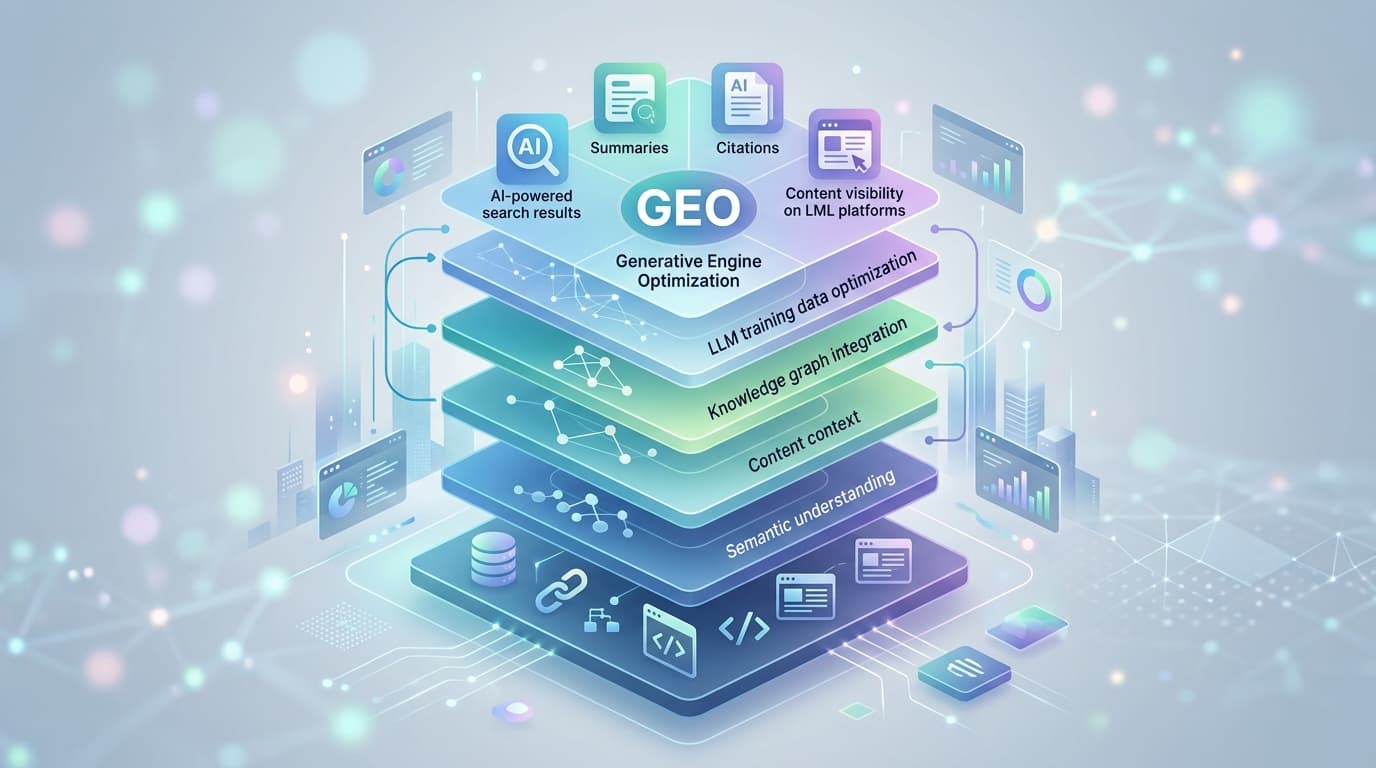
GEO can be divided into several layers, each playing a vital role in building a robust online presence. Let's analyze each of them:
1. Content Layer
The first layer of GEO is creating relevant, high-quality content. This includes blogs, articles, videos, and other formats that can be consumed by users and algorithms. The content should be optimized to answer common questions and provide value to the target audience. Using keywords related to your niche is essential, but it should be done naturally and fluidly.
2. Structure Layer
The structure of your website and how content is organized is fundamental to GEO. A well-structured site facilitates indexing by search engines and AI assistants. This includes using user-friendly URLs, intuitive navigation, and implementing structured data, which helps algorithms better understand the context of your content.
3. Authority Layer
Authority is one of the pillars of GEO. This refers to your brand's credibility and the trust that users and algorithms place in it. To increase authority, it is important to obtain citations from reputable sources, quality backlinks, and positive interactions on social media. The more your brand is mentioned in relevant contexts, the greater its authority will be.
4. Interaction Layer
User interaction with your content is also a critical layer of GEO. This includes metrics such as time spent on page, click-through rates, and shares. Engaging content tends to be valued more by AI algorithms. Therefore, it is essential to create interactive and engaging experiences that encourage users to interact with your brand.
5. Monitoring and Adjustment Layer
Last but not least is the monitoring and adjustment layer. It is crucial to track the performance of your content and GEO strategies. Use analytics tools to understand which parts of your strategy are working and which need adjustments. GEO is an ongoing process that requires adaptation to changes in algorithms and user preferences.
Conclusion
Understanding the layers of GEO is essential for any brand looking to stand out in today's digital landscape. By focusing on creating quality content, structuring your site, building authority, fostering user interaction, and continuous monitoring, you will be on the right path to optimizing your online visibility. Don't underestimate the power of GEO; it could be the key to the success of your digital marketing strategy.
Call to Action
If you are ready to take your GEO strategy to the next level, consider using platforms like MencionAI, which offer tools to monitor your visibility and optimize your citations. Don't let your brand go unnoticed!
FAQ
Is GEO a replacement for SEO?
No. SEO ranks links on a results page. GEO measures whether your brand is cited inside AI answers on ChatGPT, Gemini, Claude, Perplexity, Grok, and DeepSeek.
What should we publish first for AI citations?
Comparison pages, FAQ hubs with stable anchors, llms.txt, and Organization schema — then re-scan the same prompts.
What is E-E-A-T and how does it help AI citations?
Google Search Central describes E-E-A-T as experience, expertise, authoritativeness, and trustworthiness — trust first. Named authors, first-hand experience, and citations to official docs help people judge who stands behind the page. Structured data is not required for AI Overviews, but Article, Person, and Organization markup still help Search understand the author and publisher.