
60 Million Brazilians Using AI by 2026: Opportunities in GEO and Visibility
MencionAI Blog Vinícius Guimarães de Oliveira
MencionAI Blog Aug 20, 2026 · 3 min read / Market
Brazil is heading towards a significant milestone in the adoption of artificial intelligence, with projections indicating that 60 million Brazilians will be using AI tools by the end of 2026. This explosive growth represents a strategic opportunity for brands looking to stand out in generative AI environments.
Quick answer
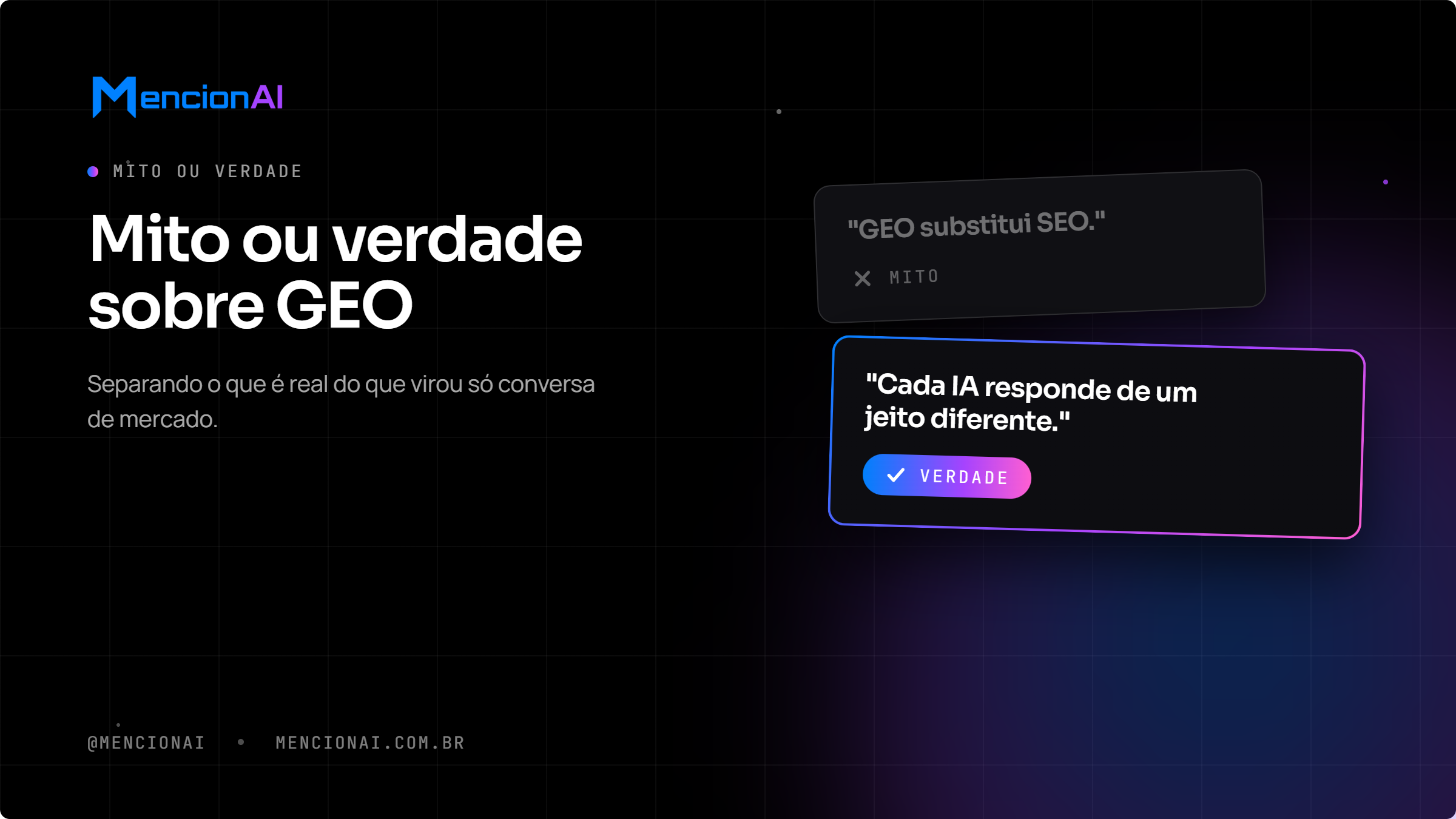
No. SEO ranks links on a results page. GEO measures whether your brand is cited inside AI answers on ChatGPT, Gemini, Claude, Perplexity, Grok, and DeepSeek.
Summary
- Recent studies show that the use of assistants like ChatGPT, Gemini, and Claude is rapidly expanding among Brazilian consumers and professionals.
- Generative Engine Optimization (GEO) emerges as an essential discipline in this new context.
- Tracking performance in real-time is crucial.
- The AI competitor radar allows you to compare your visibility with that of national and international players.
- With 60 million Brazilians using AI by 2026, the time to act is now.
The Accelerated Growth of AI in Brazil
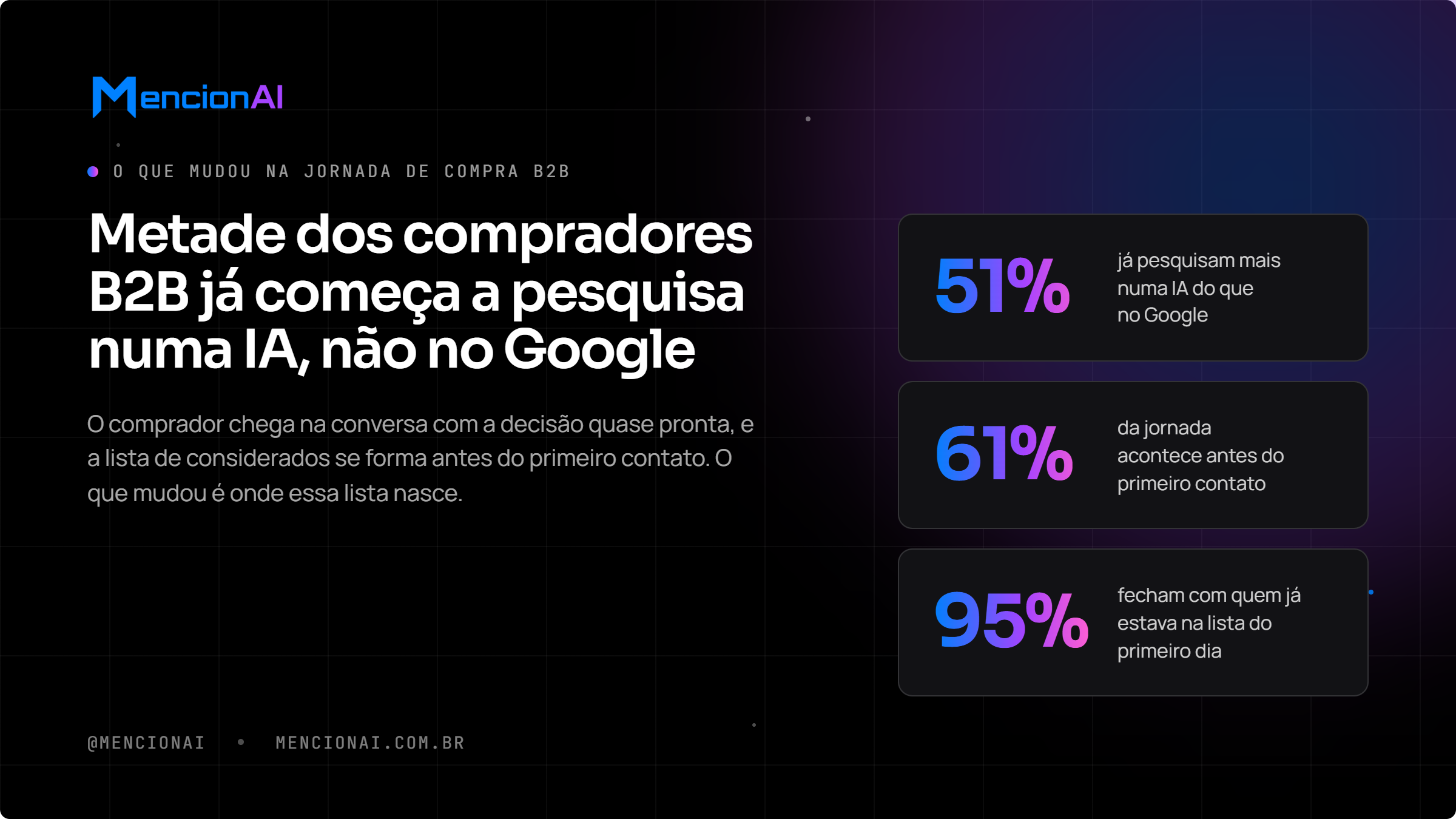
Recent studies show that the use of assistants like ChatGPT, Gemini, and Claude is rapidly expanding among Brazilian consumers and professionals. By 2026, it is expected that nearly 30% of the adult population will regularly interact with AI for searches, content creation, and decision-making. This scenario transforms how companies need to think about digital visibility, going beyond traditional search engines.
Companies that ignore this trend risk losing relevance, as more and more users receive direct answers from AI instead of clicking on organic links.
Implications for GEO Strategies
Generative Engine Optimization (GEO) emerges as an essential discipline in this new context. Unlike traditional SEO, GEO focuses on optimizing content to be directly cited by language models. In Brazil, with 60 million potential users, brands need to adapt their materials to answer questions clearly, authoritatively, and structurally.
Techniques such as including local statistical data, using natural language in Portuguese, and creating content with verifiable sources increase the chances of citation. Platforms like MencionAI allow you to monitor exactly when and how your brand appears in AI responses.
Citation Monitoring and AI Visibility
Tracking performance in real-time is crucial. AI visibility monitoring tools reveal which content is being cited, which competitors dominate specific responses, and where there are coverage gaps. With the Brazilian market growing so rapidly, tracking mentions helps adjust strategies before the competition advances.
Companies that implement citation dashboards can identify patterns, such as the most searched terms in Portuguese and emerging themes related to local products or services.
Competitor Radar in the AI Landscape
The AI competitor radar allows you to compare your visibility with that of national and international players. In Brazil, sectors such as e-commerce, education, and finance already show high competition for citations in generative responses. Analyzing what works for market leaders helps replicate successes and avoid pitfalls.
Brazilian brands should prioritize content in Portuguese optimized for regional questions, incorporating cultural references and data from IBGE or local sources to increase credibility with AI models.
Preparing Your Brand for the Future
With 60 million Brazilians using AI by 2026, the time to act is now. Invest in high-quality content production, test variations of prompts, and utilize specialized GEO solutions to measure results. Visibility in AI assistants is no longer optional — it is the new standard for brand discovery in Brazil.
FAQ
Is GEO a replacement for SEO?
No. SEO ranks links on a results page. GEO measures whether your brand is cited inside AI answers on ChatGPT, Gemini, Claude, Perplexity, Grok, and DeepSeek.
What should we publish first for AI citations?
Comparison pages, FAQ hubs with stable anchors, llms.txt, and Organization schema — then re-scan the same prompts.
What is E-E-A-T and how does it help AI citations?
Google Search Central describes E-E-A-T as experience, expertise, authoritativeness, and trustworthiness — trust first. Named authors, first-hand experience, and citations to official docs help people judge who stands behind the page. Structured data is not required for AI Overviews, but Article, Person, and Organization markup still help Search understand the author and publisher.
Should Brazilian brands optimize in Portuguese, English, or both?
Both. Brazilian B2B buyers mix PT-BR and English prompts. Publish citable PT-BR pages first, keep stable English canonicals for global models, and measure ChatGPT, Gemini, Claude, Perplexity, Grok, and DeepSeek in Brazil.