How to Conduct an AI Visibility Audit, Step by Step
MencionAI Blog Pedro Quintian
MencionAI Blog Oct 09, 2026 · 5 min read / Monitoring
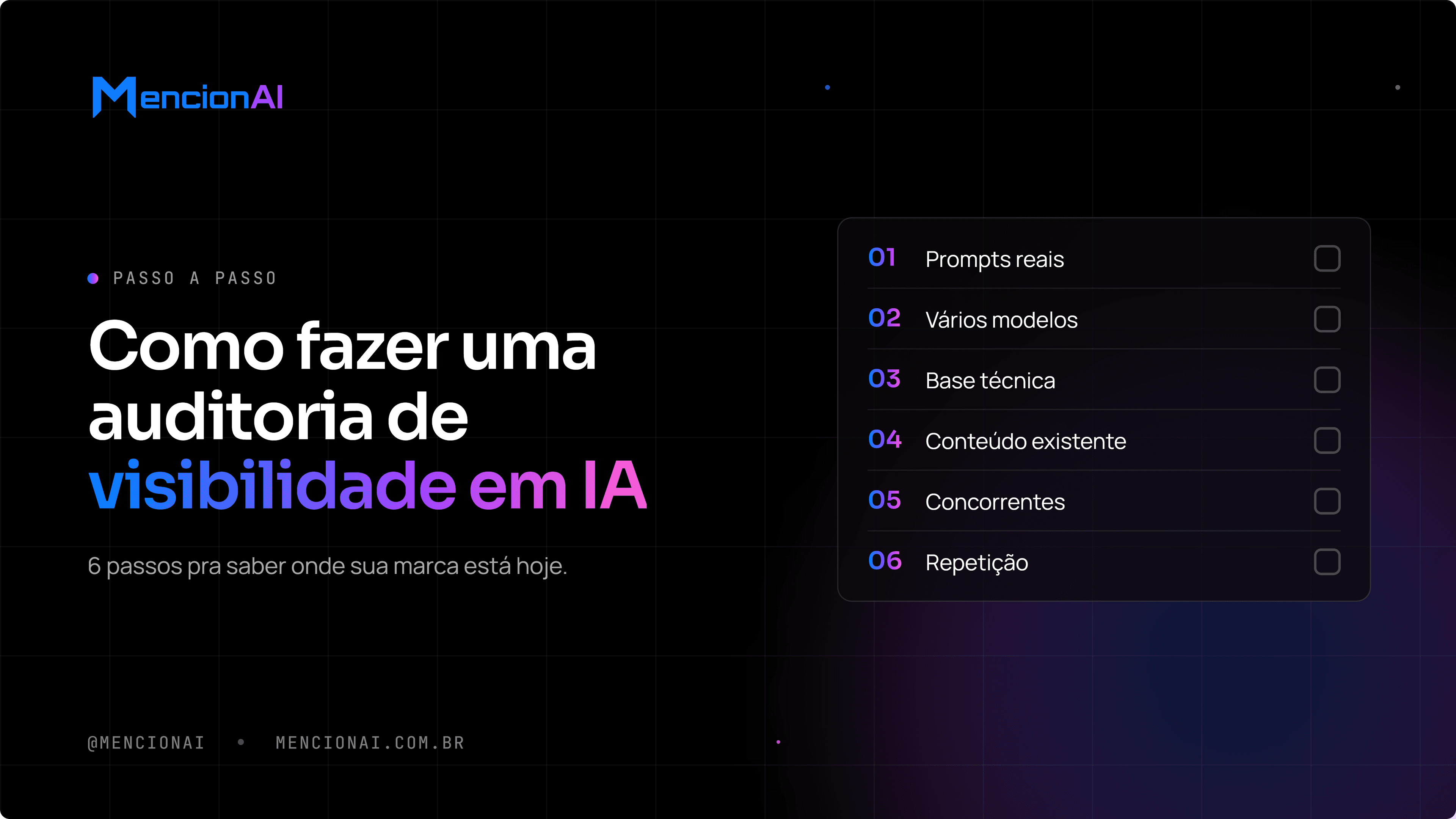
Before making any changes to your website or content, it’s important to know where your brand currently stands in the responses of ChatGPT, Gemini, and Claude. This is an AI visibility audit, and it can be done in 6 steps.
Quick answer
No. SEO ranks links on a results page. GEO measures whether your brand is cited inside AI answers on ChatGPT, Gemini, Claude, Perplexity, Grok, and DeepSeek.
Summary
- Use questions that describe a need or category, just as a customer would ask, without mentioning any brand.
- ChatGPT, Gemini, Claude, and Perplexity do not always respond the same way to the same prompt, and each decides differently when to search for updated information on the web instead of responding solely with what it lear
- Before making any content adjustments, check if AI bots can access your website.
- For each prompt where the brand did not appear, or appeared without being cited as a source, look at what is already published on that topic.
- Run the same prompts for both sides in the same round.
- A single round is just a snapshot. Repeating the same set of prompts periodically shows whether the brand's presence is improving, worsening, or stagnant, and this indicates whether it’s worth investigating before reacti
1. Create a Set of Real Prompts
Use questions that describe a need or category, just as a customer would ask, without mentioning any brand. Something like "what tools exist for X" or "what is the best option for Y". A prompt that mentions a specific brand generates a response focused only on that brand, which does not help in mapping the complete scenario.
2. Test Across Multiple Models, Not Just One
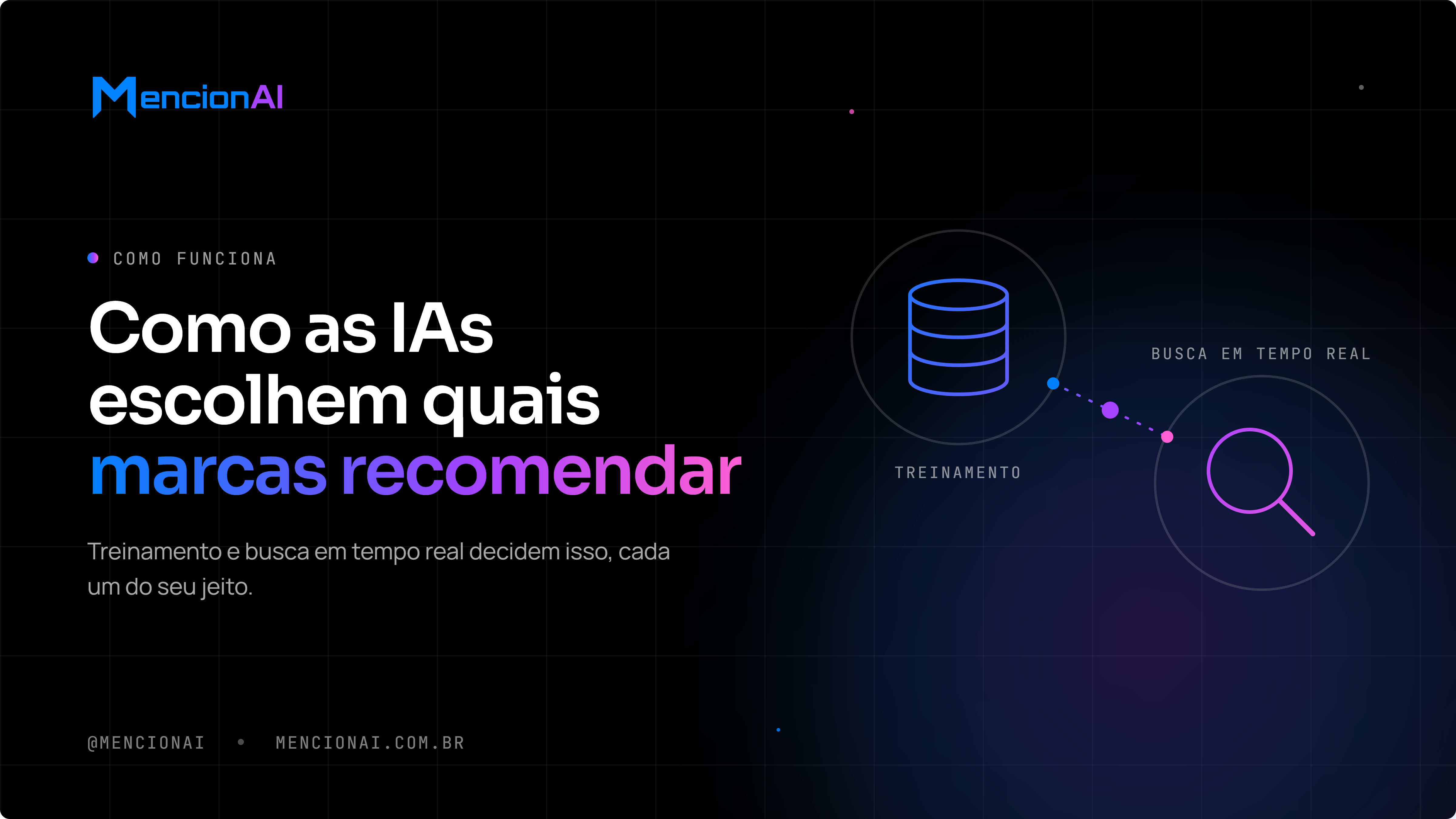
ChatGPT, Gemini, Claude, and Perplexity do not always respond the same way to the same prompt, and each decides differently when to search for updated information on the web instead of responding solely with what it learned during training. Testing just one model shows only a fraction of the scenario. It’s also worth repeating the same prompt multiple times: a study by SparkToro in partnership with Gumshoe.ai, involving 2,961 prompt executions in ChatGPT, Claude, and Google’s AI, found less than a 1 in 100 chance that two executions of the same prompt would yield exactly the same list of brands (SparkToro). A single execution does not reveal the real pattern.
3. Check the Technical Foundation
Before making any content adjustments, check if AI bots can access your website. Open "yourdomain.com/robots.txt" in your browser and look for a "User-agent" line with the name of an AI crawler (GPTBot, ClaudeBot, PerplexityBot) just above "Disallow: /". If this appears, that bot is prohibited from reading the entire site, without any visible warning anywhere. It’s also worth checking if there is structured data of the type Organization on the site: it explicitly declares what the company is and helps compatible mechanisms recognize the brand as a specific entity, which is particularly important for generic names or names similar to another company (Google Search Central).
4. Review Existing Content
For each prompt where the brand did not appear, or appeared without being cited as a source, look at what is already published on that topic. Does the content answer the question directly, with concrete data, in a way that an AI could use as a reference, or does it remain in generic sales text, with nothing specific to cite? This difference often weighs more than the mere existence of the content.
5. Compare with Competitors Using the Same Prompts
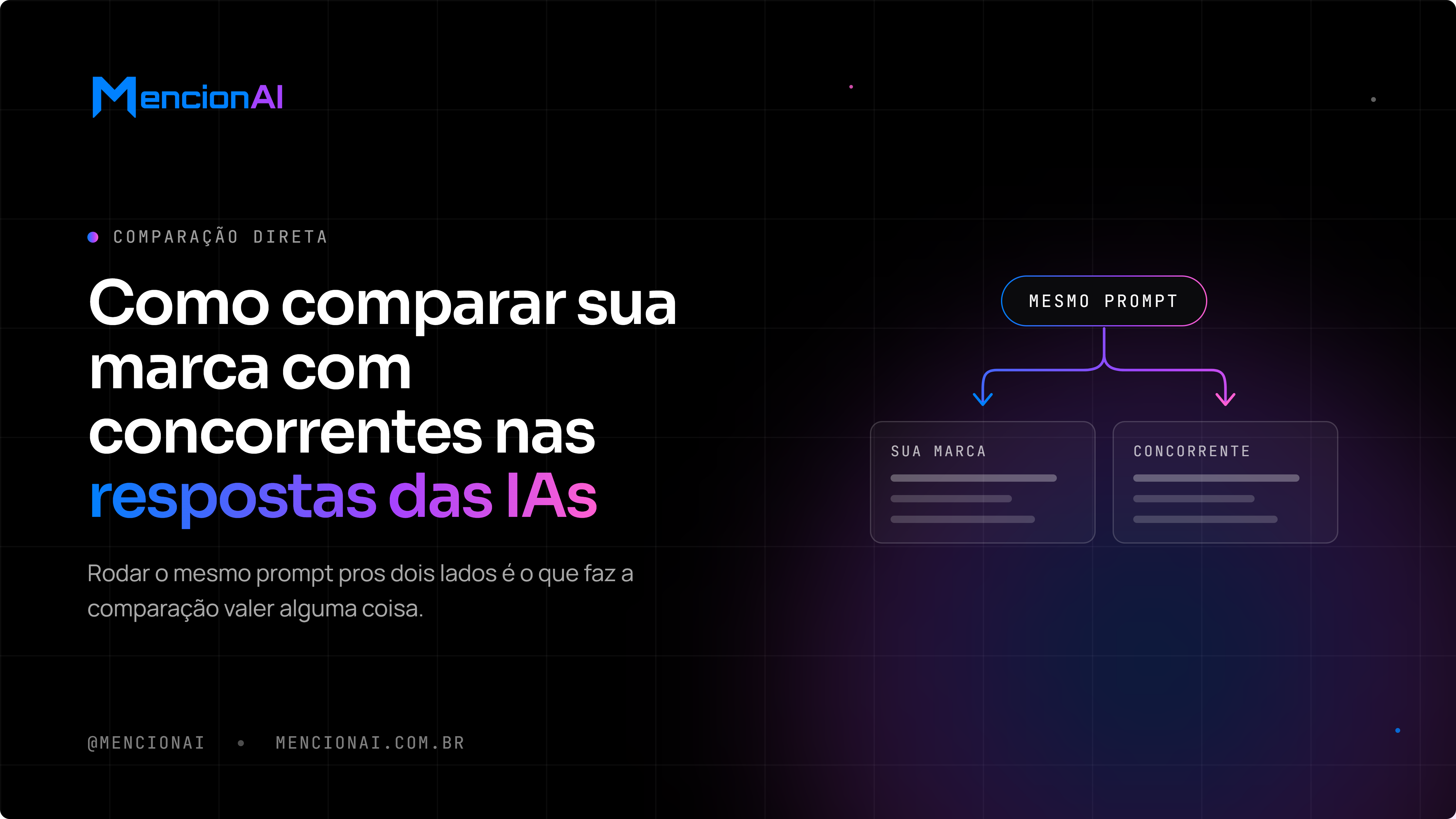
Run the same prompts for both sides in the same round. A different prompt or round is not a fair comparison, because the difference that appears may come solely from the natural variation between executions, not from a real difference between the brands. Look at frequency (how many executions each brand appears in), position (the order when the response lists options), and whether the cited sources for both sides are the same domains or not.
6. Repeat Periodically and Track with a Single Metric
A single round is just a snapshot. Repeating the same set of prompts periodically shows whether the brand's presence is improving, worsening, or stagnant, and this indicates whether it’s worth investigating before reacting to an isolated result.
How MencionAI Approaches This
These 6 steps describe the manual process. At MencionAI, it happens in an automated and continuous manner: the platform executes the registered prompts in new conversations, repeatedly, across multiple models at the same time, and records mentions, positions, present competitors, and cited sources in each execution.
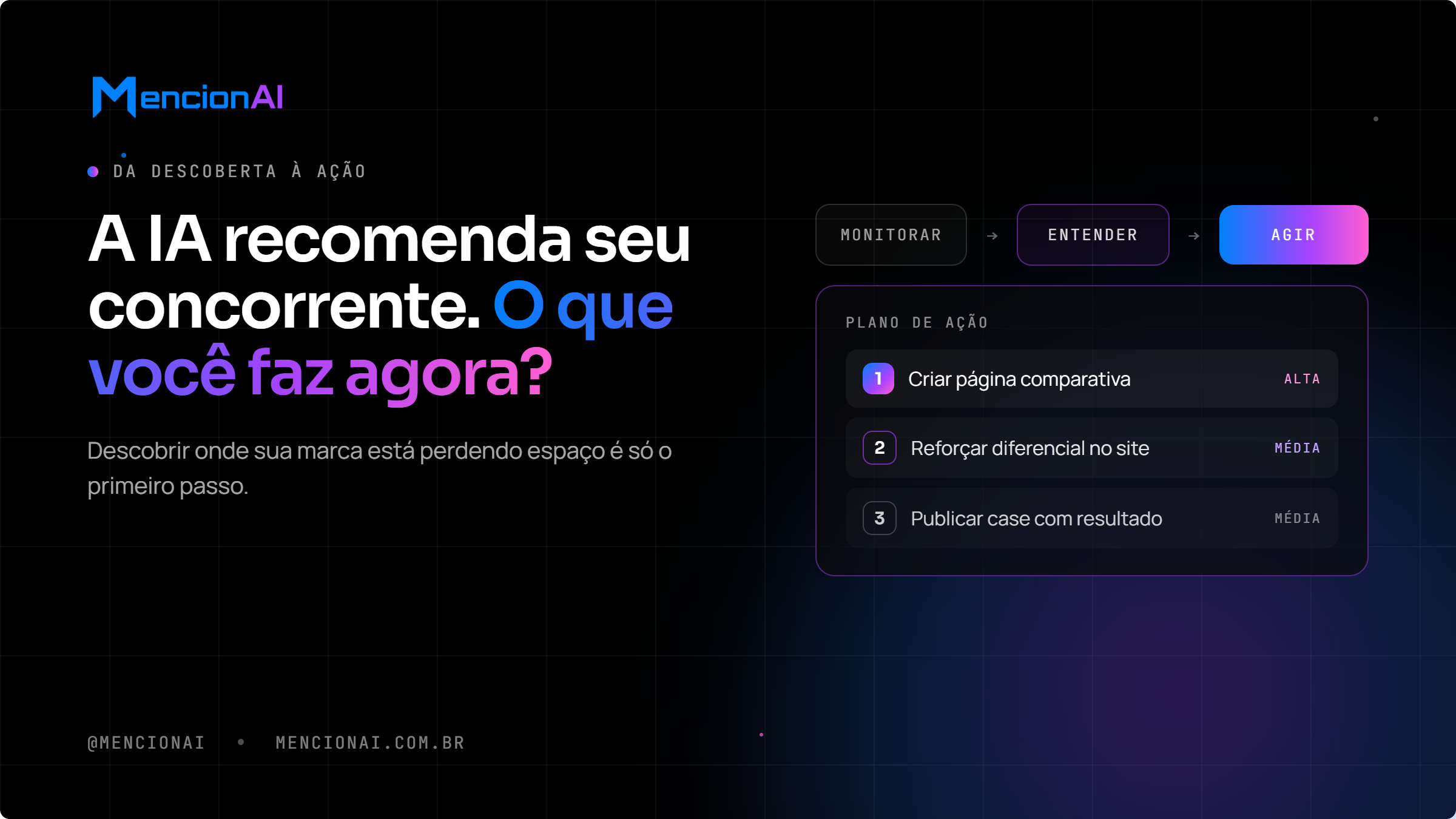
To summarize all this in a single number, we calculate the ARS (AI Recommendation Score), which crosses mention frequency, position in the response, citation quality, and coverage among the tested models, from 0 to 100. The gaps found feed into the Action Plan, with a specific action for each gap, not just a general diagnosis.
If you want to run this audit for your brand, schedule a demo.
Pedro, CMO of MencionAI
Frequently Asked Questions
How many prompts do I need for an audit to be worthwhile? There is no fixed number. What matters is covering the real questions a customer would ask about your category, without mentioning a brand, and repeating each one multiple times, as the same question can yield different answers in different executions.
Does a single audit solve everything? It provides a snapshot of the moment, not a trend. The greater value comes from repeating the same set of prompts periodically and comparing with previous results.
Do I need to test all existing AI models? At least the ones your customers are most likely using. ChatGPT, Gemini, and Claude cover most cases, and each can yield different results for the same prompt.
Does this replace continuous monitoring? A manual audit gives an initial snapshot. To track changes over time without repeating the manual process every week, this falls under continuous monitoring, which is what MencionAI automates.
FAQ
Is GEO a replacement for SEO?
No. SEO ranks links on a results page. GEO measures whether your brand is cited inside AI answers on ChatGPT, Gemini, Claude, Perplexity, Grok, and DeepSeek.
What should we publish first for AI citations?
Comparison pages, FAQ hubs with stable anchors, llms.txt, and Organization schema — then re-scan the same prompts.
What is E-E-A-T and how does it help AI citations?
Google Search Central describes E-E-A-T as experience, expertise, authoritativeness, and trustworthiness — trust first. Named authors, first-hand experience, and citations to official docs help people judge who stands behind the page. Structured data is not required for AI Overviews, but Article, Person, and Organization markup still help Search understand the author and publisher.
Sources
- SparkToro and Gumshoe.ai: AIs are highly inconsistent when recommending brands or products
- OpenAI Help Center: Searching the web with ChatGPT
- Anthropic: Web search tool
- Google AI for Developers: Grounding with Google Search
- Google Search Central: Organization structured data
- Google Search Central — Article structured data