The complete GEO guide for marketing teams
MencionAI Blog MencionAI
MencionAI Blog Sep 16, 2026 · 2 min read
Quick answer
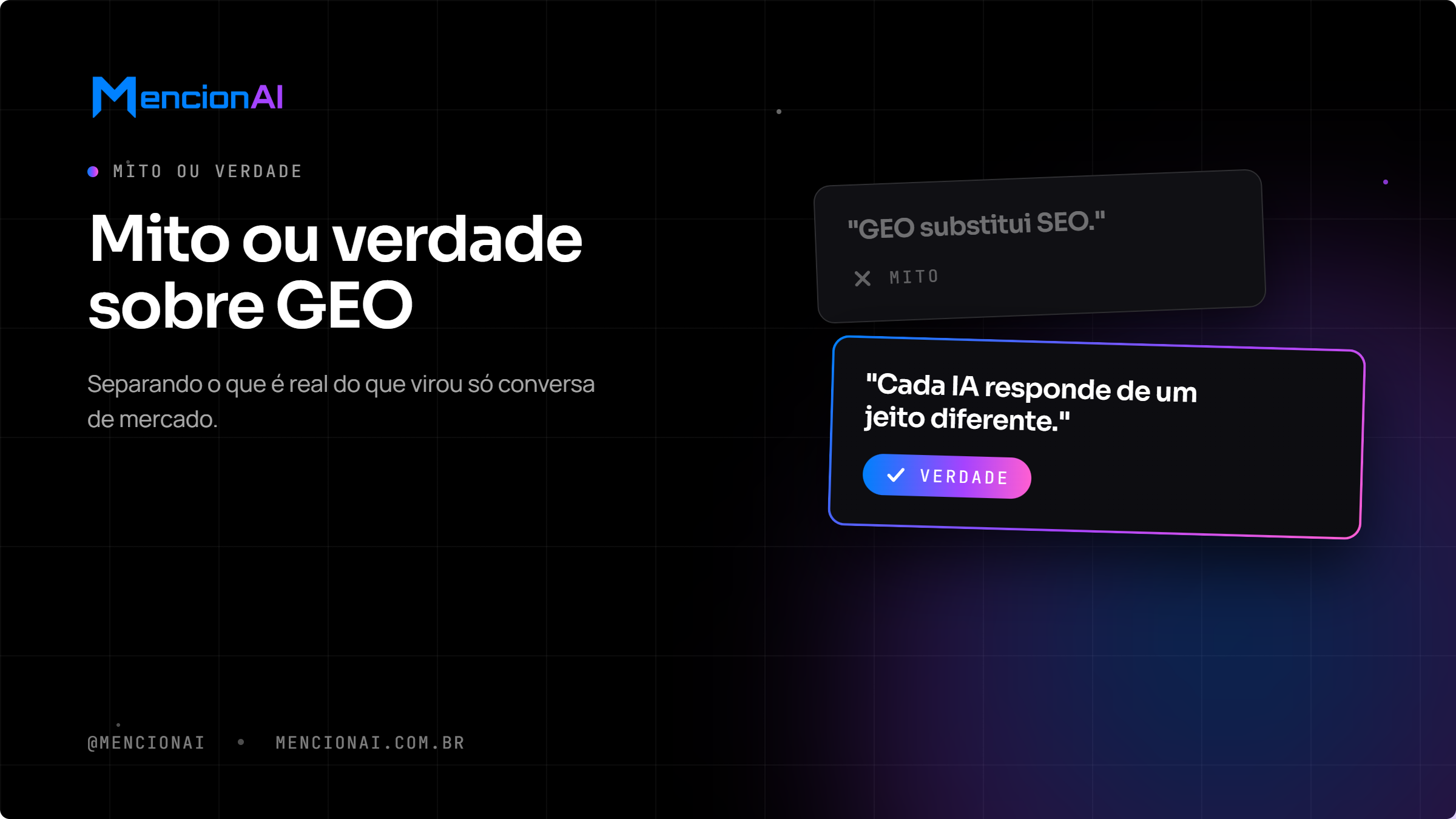
No. SEO ranks links on a results page. GEO measures whether your brand is cited inside AI answers on ChatGPT, Gemini, Claude, Perplexity, Grok, and DeepSeek.
Summary
- GEO (Generative Engine Optimization) is the practice of measuring and improving how your brand is cited, recommended, and compared inside AI-generated answers — not just traditional search results.
- SEO optimizes for links on a search engine results page.
- - Visibility score (0–100): how often your brand appears across monitored prompts and models.
- 1. Baseline — Run 10–20 buyer-intent prompts across major models in your market language.
- Prioritize pages that answer “best X for Y” and “X vs Y” queries, publish llms.
What is GEO?
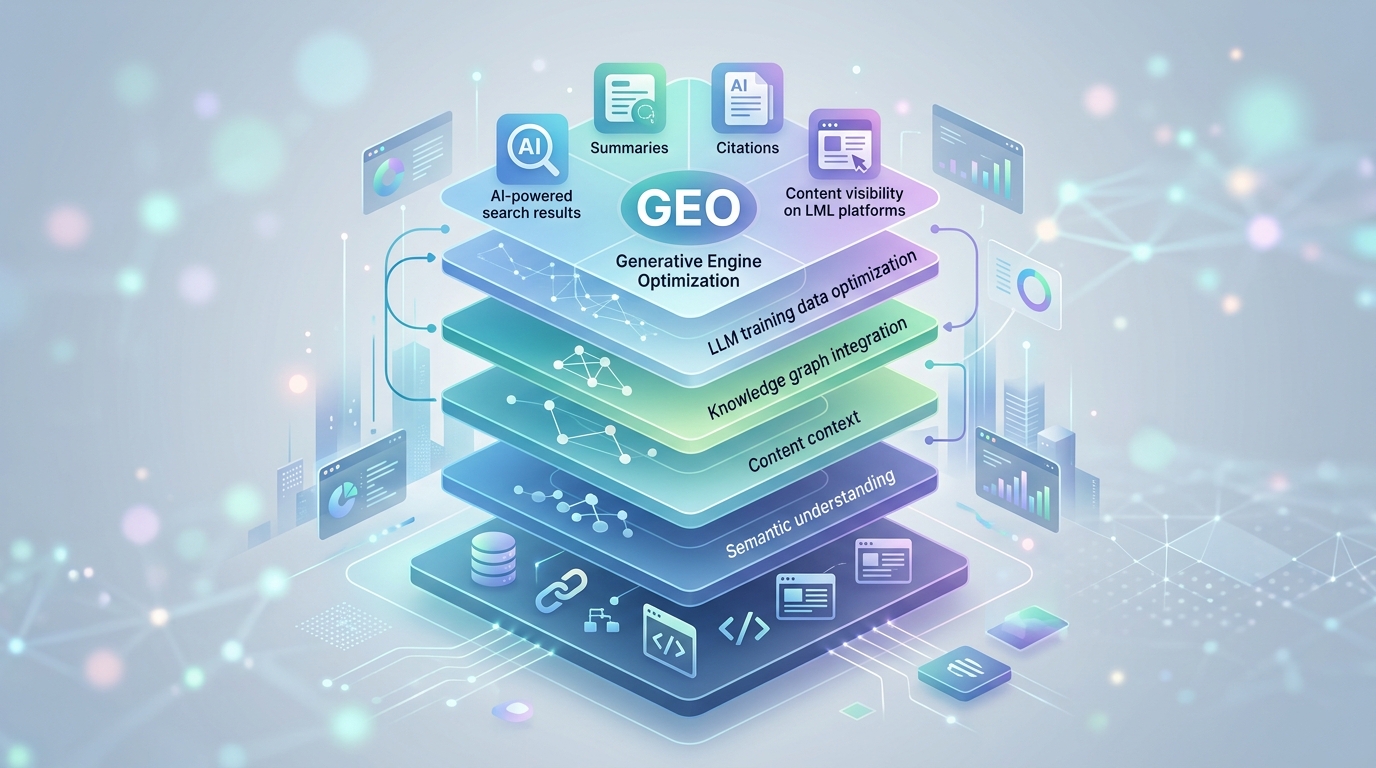
GEO (Generative Engine Optimization) is the practice of measuring and improving how your brand is cited, recommended, and compared inside AI-generated answers — not just traditional search results.
MencionAI is built for Brazil-first teams: measure ChatGPT, Gemini, Claude, Perplexity, Grok, and DeepSeek on Portuguese and English buyer prompts.
GEO vs SEO
SEO optimizes for links on a search engine results page. GEO optimizes for presence inside the answer when buyers ask ChatGPT, Perplexity, Gemini, or Claude. A page can rank on Google and still be invisible in AI responses if models never cite your domain.
Core metrics
- Visibility score (0–100): how often your brand appears across monitored prompts and models.
- Share of voice: your mention share versus named competitors on the same questions.
- Citation gaps: topics where competitors are cited and you are not — inputs for your action plan.
A practical 30-day rollout
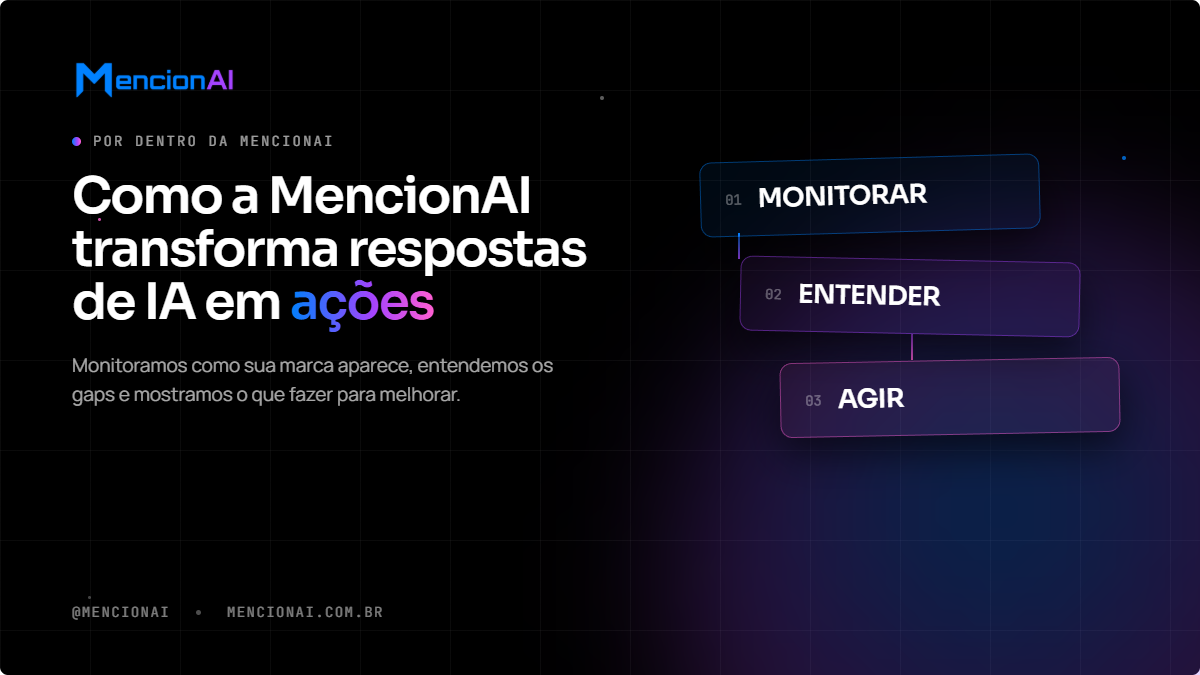
- Baseline — Run 10–20 buyer-intent prompts across major models in your market language.
- Benchmark — Add top five competitors and compare share of voice on the same prompt set.
- Ship citation assets — Comparison pages, FAQ hubs with stable anchor IDs,
/llms.txt, and clear entity schema. - Re-scan weekly — Track movement after each content or positioning change.
What to fix first (POA-aligned)
Prioritize pages that answer “best X for Y” and “X vs Y” queries, publish llms.txt and AI-aware robots.txt, and ensure Organization plus SoftwareApplication JSON-LD on key URLs.
Read the full guide · How visibility scoring works · Mention types & citations
FAQ
Is GEO a replacement for SEO?
No. SEO ranks links on a results page. GEO measures whether your brand is cited inside AI answers on ChatGPT, Gemini, Claude, Perplexity, Grok, and DeepSeek.
What should we publish first for AI citations?
Comparison pages, FAQ hubs with stable anchors, llms.txt, and Organization schema — then re-scan the same prompts.
What is E-E-A-T and how does it help AI citations?
Google Search Central describes E-E-A-T as experience, expertise, authoritativeness, and trustworthiness — trust first. Named authors, first-hand experience, and citations to official docs help people judge who stands behind the page. Structured data is not required for AI Overviews, but Article, Person, and Organization markup still help Search understand the author and publisher.
Sources
- Google Search Central — helpful, people-first content (E-E-A-T)
- Google Search Central — AI-generated content
- Google Search Central — generative AI features on Search
- Google AI features (AI Overviews and AI Mode)
- Google Search Central — Article structured data
- Google Search Central — Organization structured data