SEO vs GEO: What’s the Difference and How to Prepare Your Brand for AI Search
MencionAI Blog Vinícius Guimarães de Oliveira
MencionAI Blog Apr 20, 2026 · 6 min read / SEO
SEO optimizes your presence for search engines like Google; GEO optimizes your brand to be cited by AI assistants and generative engines. In practice, the two complement each other: SEO helps you be found, GEO helps you be mentioned.
Quick answer
No. SEO ranks links on a results page. GEO measures whether your brand is cited inside AI answers on ChatGPT, Gemini, Claude, Perplexity, Grok, and DeepSeek.
Summary
- SEO, or Search Engine Optimization, is the set of practices used to improve page rankings in traditional search engines.
- GEO, or Generative Engine Optimization, is optimization for generative engines and AI assistants.
- The biggest difference lies in the destination of the optimization.
- They complement each other. And that’s the strategic part.
- If you’re still creating content only to “move up in Google,” you may be ignoring how people search for information today.
- Imagine an HR software company that wants to show up for the search “best digital onboarding software.
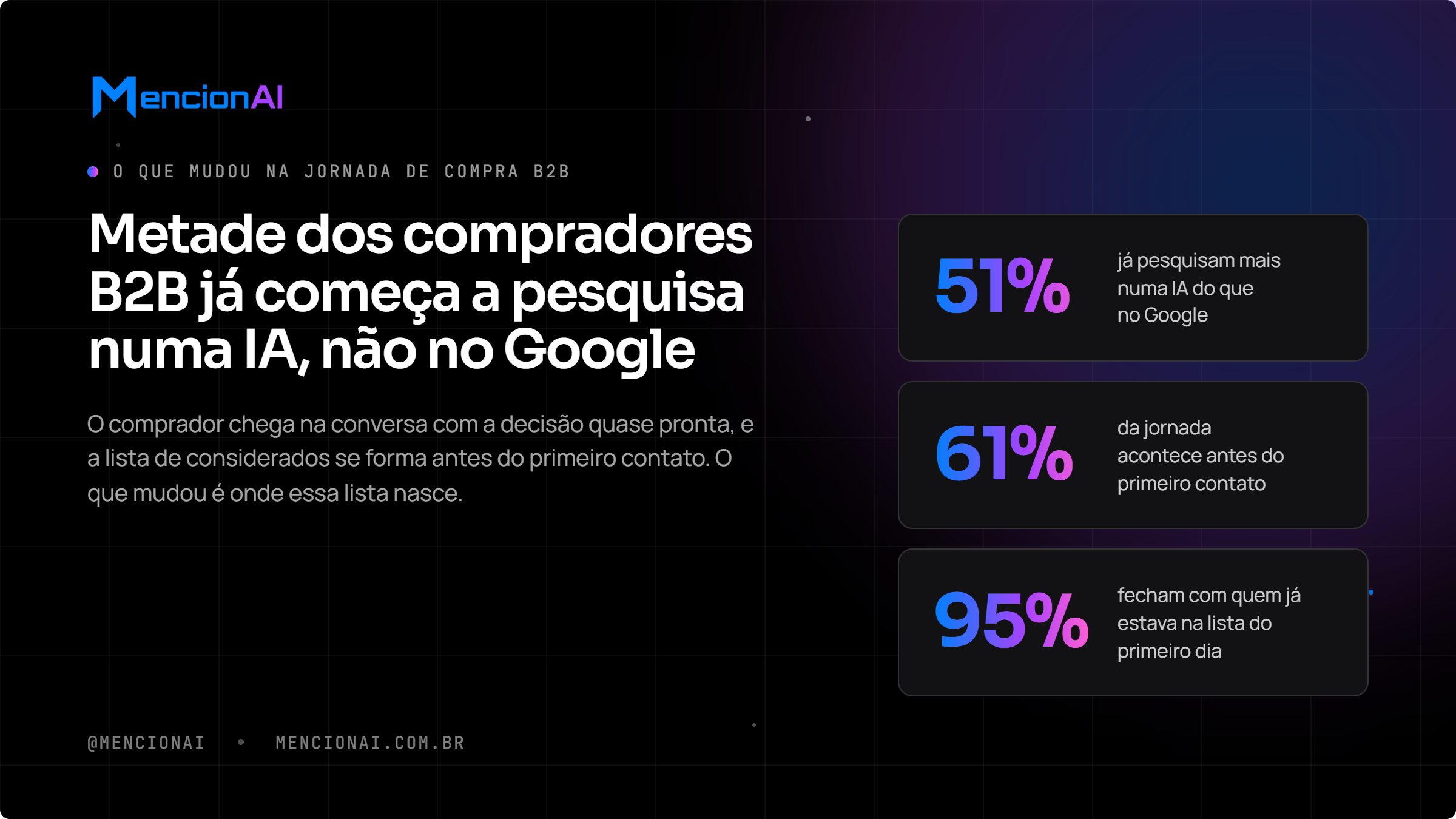
If you still treat SEO and GEO as synonyms, you’re missing an important shift in search behavior. The discovery journey no longer happens only on Google’s results page. Today, users ask tools like ChatGPT, Perplexity, Gemini, and Copilot, and expect ready-made, summarized, trustworthy answers.
That changes the game. It’s no longer enough to rank well. Now, your brand also needs to appear as a source, reference, or entity cited in AI-generated answers.
What is SEO?
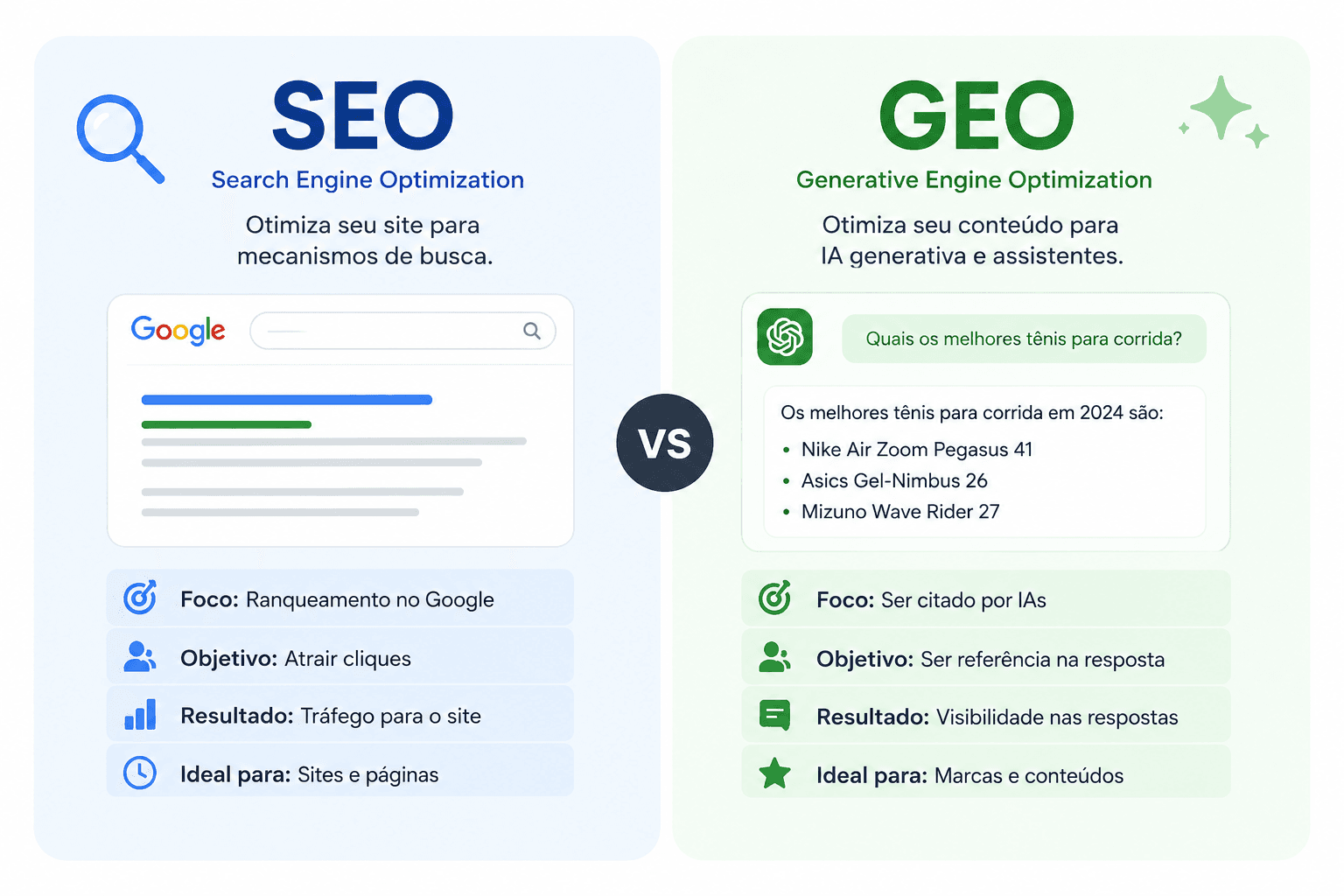
SEO, or Search Engine Optimization, is the set of practices used to improve page rankings in traditional search engines. The goal is to increase organic visibility in Google and other search results.
In practice, SEO works across pillars such as:
- keyword research
- relevant, useful content
- on-page optimization
- domain authority
- backlinks
- technical site experience
- search intent
The main focus of SEO is to make a page appear among the top results when someone searches for a specific term.
What is GEO?
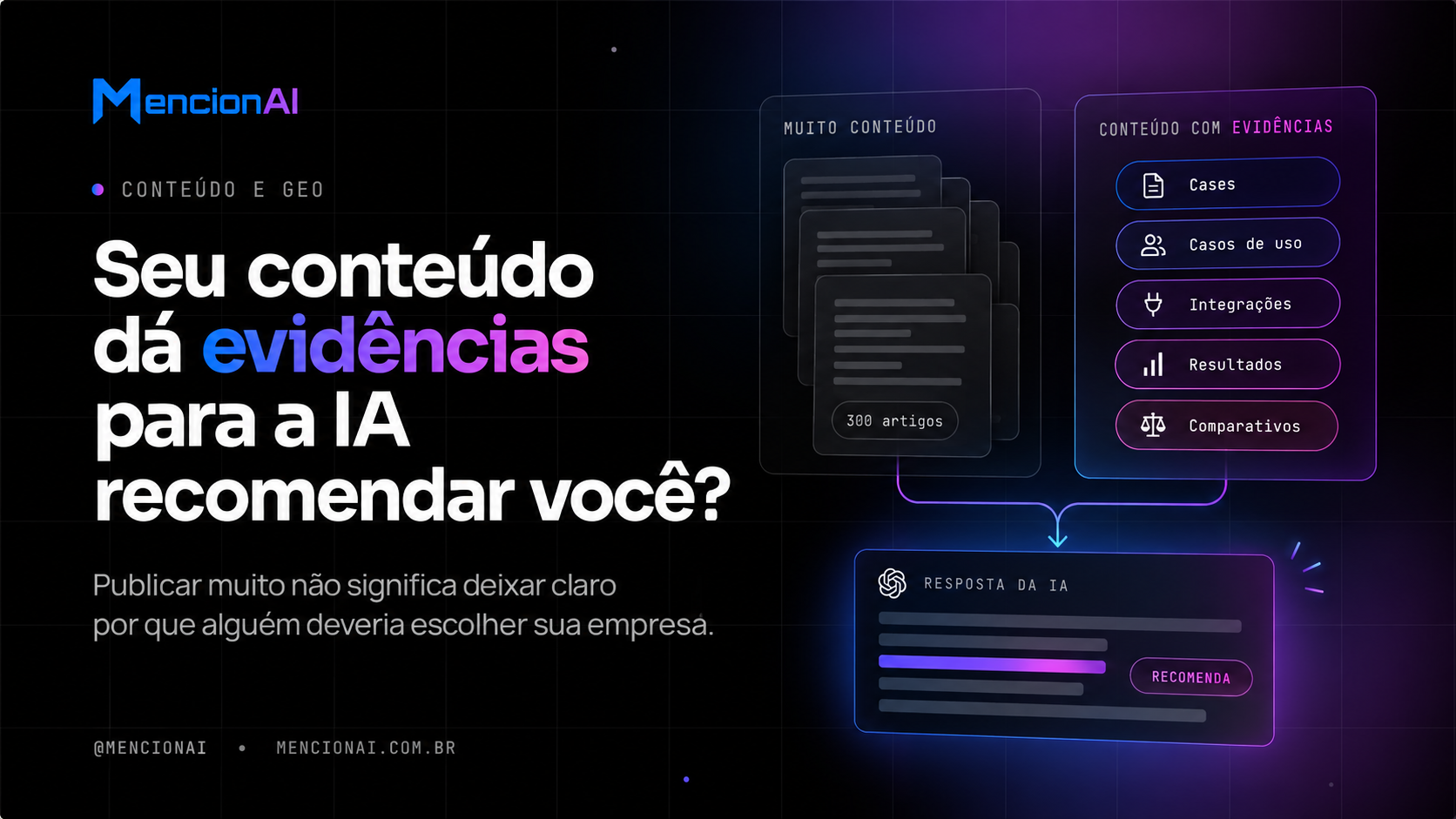
GEO, or Generative Engine Optimization, is optimization for generative engines and AI assistants. The goal is not just to show up in a list of links, but to be used as a source in the answers AI generates.
Instead of thinking only about rankings, GEO focuses on:
- being cited in AI answers
- having clear, verifiable, structured information
- gaining relevance as a trusted entity
- appearing in comparison, recommendation, and summary contexts
- increasing brand presence across AI search surfaces
If in SEO the question is “what position am I in?”, in GEO the question is “does AI choose me as a source?”
The practical difference between SEO and GEO
The biggest difference lies in the destination of the optimization.
SEO optimizes for clicks
SEO aims for organic traffic. You create content to rank, attract visits, and convert users on your site.
GEO optimizes for citations
GEO aims to influence the response. The user may never click through to your site, but your brand can appear in the generated answer, affecting perception, authority, and consideration.
SEO depends heavily on SERPs
In SEO, the competition happens on the results page. Titles, meta descriptions, backlinks, and authority still matter.
GEO depends on comprehensibility and trust
In GEO, content needs to be easy for AI models to interpret. That includes clarity, consistency, structure, reliable data, and authority signals across multiple sources.
Do SEO and GEO compete or complement each other?
They complement each other. And that’s the strategic part.
Good SEO work creates the foundation for GEO. If your brand already has useful content, strong architecture, domain authority, and a consistent web presence, AI systems can more easily understand who you are and when to cite you.
But GEO requires something more:
- content oriented to answers, not just keywords
- objective language with no ambiguity
- up-to-date data
- explanations with context
- citations, proof, and authority signals
- presence in sources that AIs recognize as trustworthy
In other words: SEO puts you on the map; GEO increases the chance of you becoming the answer.
How content strategy changes
If you’re still creating content only to “move up in Google,” you may be ignoring how people search for information today.
In SEO, you think in terms of search intent
You organize content to answer terms and keyword variations.
In GEO, you think in terms of answer intent
You structure content so an AI can extract a trustworthy summary, compare options, and identify your brand as a reference.
That means investing in:
- pages with clear definitions
- well-written FAQs
- objective comparisons
- verifiable data and statistics
- concrete examples
- visible authorship and credentials
- consistency of information across your digital ecosystem
A simple example: an HR software company
Imagine an HR software company that wants to show up for the search “best digital onboarding software.”
In SEO, it can create an optimized landing page, publish articles about digital onboarding, and build backlinks to rank higher.
In GEO, it also needs to make sure an AI can answer something like:
“The most cited options for digital onboarding include X, Y, and Z, with emphasis on automation features, integrations, and compliance.”
To do that, the brand needs to be described clearly, have proof of differentiation, presence in external sources, and content that generative models can easily summarize.
How to start optimizing for GEO without abandoning SEO
You don’t need to choose one or the other. The ideal approach is to build a hybrid strategy.
1. Strengthen your SEO foundation
Without good indexing, useful content, and authority, GEO becomes weak.
2. Write to be understood by both humans and machines
Use clear titles, concise subtitles, lists, definitions, and direct answers.
3. Increase your trust signals
Show data, case studies, authors, sources, and real proof. AI tends to value content with consistency and credibility.
4. Monitor mentions and citations
It’s not enough to know whether you rank. You need to track whether your brand is being cited by AI tools and in what contexts.
5. Watch competitors
Understanding who is being cited in answers helps identify content gaps, priority topics, and positioning opportunities.
The future of organic visibility is hybrid
The difference between SEO and GEO is not just technical. It’s strategic.
SEO remains essential for discovery, traffic, and authority. GEO adds a new layer of visibility, where your brand needs to be understood, referenced, and used as a source by generative systems.
For brands that want to grow in the AI era, the question is no longer “SEO or GEO?” The right question is: how do you build organic presence that works both in search engines and in AI-generated answers?
If you want to measure this new layer of visibility, track citations, mentions, and presence in AI answers with a GEO platform. It will show, in practice, where your brand appears — and where your competitors are gaining ground.
FAQ
Is GEO a replacement for SEO?
No. SEO ranks links on a results page. GEO measures whether your brand is cited inside AI answers on ChatGPT, Gemini, Claude, Perplexity, Grok, and DeepSeek.
What should we publish first for AI citations?
Comparison pages, FAQ hubs with stable anchors, llms.txt, and Organization schema — then re-scan the same prompts.
What is E-E-A-T and how does it help AI citations?
Google Search Central describes E-E-A-T as experience, expertise, authoritativeness, and trustworthiness — trust first. Named authors, first-hand experience, and citations to official docs help people judge who stands behind the page. Structured data is not required for AI Overviews, but Article, Person, and Organization markup still help Search understand the author and publisher.