
Reputation Management in the Generative Era: How to Mitigate AI Hallucinations
MencionAI Blog Vinícius Guimarães de Oliveira
MencionAI Blog Jul 02, 2026 · 5 min read / Reputation
The rise of generative assistants has changed the way brands are discovered, compared, and evaluated. Today, an AI response can shape perceptions of your company before anyone even visits your website — and that makes reputation management more complex, because errors, omissions, and “hallucinations” can spread while seeming true.
Quick answer
Google Search Central describes E-E-A-T as experience, expertise, authoritativeness, and trustworthiness — trust first. Named authors, first-hand experience, and citations to official docs help people judge who stands behind the page.
Summary
- A hallucination is when an AI model produces incorrect, invented, or distorted information with a high degree of confidence.
- Generative responses can be influenced by different layers of information: Outdated public content If your website, blog, documentation, social profiles, or partner pages are inconsistent, the model may combine old data
- The good news is that reputation in the generative era can be protected with strategy, monitoring, and editorial discipline.
- Generative Engine Optimization is not just about gaining visibility.
- Mitigating AI hallucinations is not the job of a single campaign.
- The generative era requires a new mindset: your brand does not just need to be found, it needs to be interpreted correctly.
What AI hallucinations are and why they affect reputation
A hallucination is when an AI model produces incorrect, invented, or distorted information with a high degree of confidence. In a brand context, that can mean:
- attributing a feature your product does not have;
- confusing your company with a competitor;
- citing outdated pricing, integrations, or use cases;
- making claims without reliable source backing.
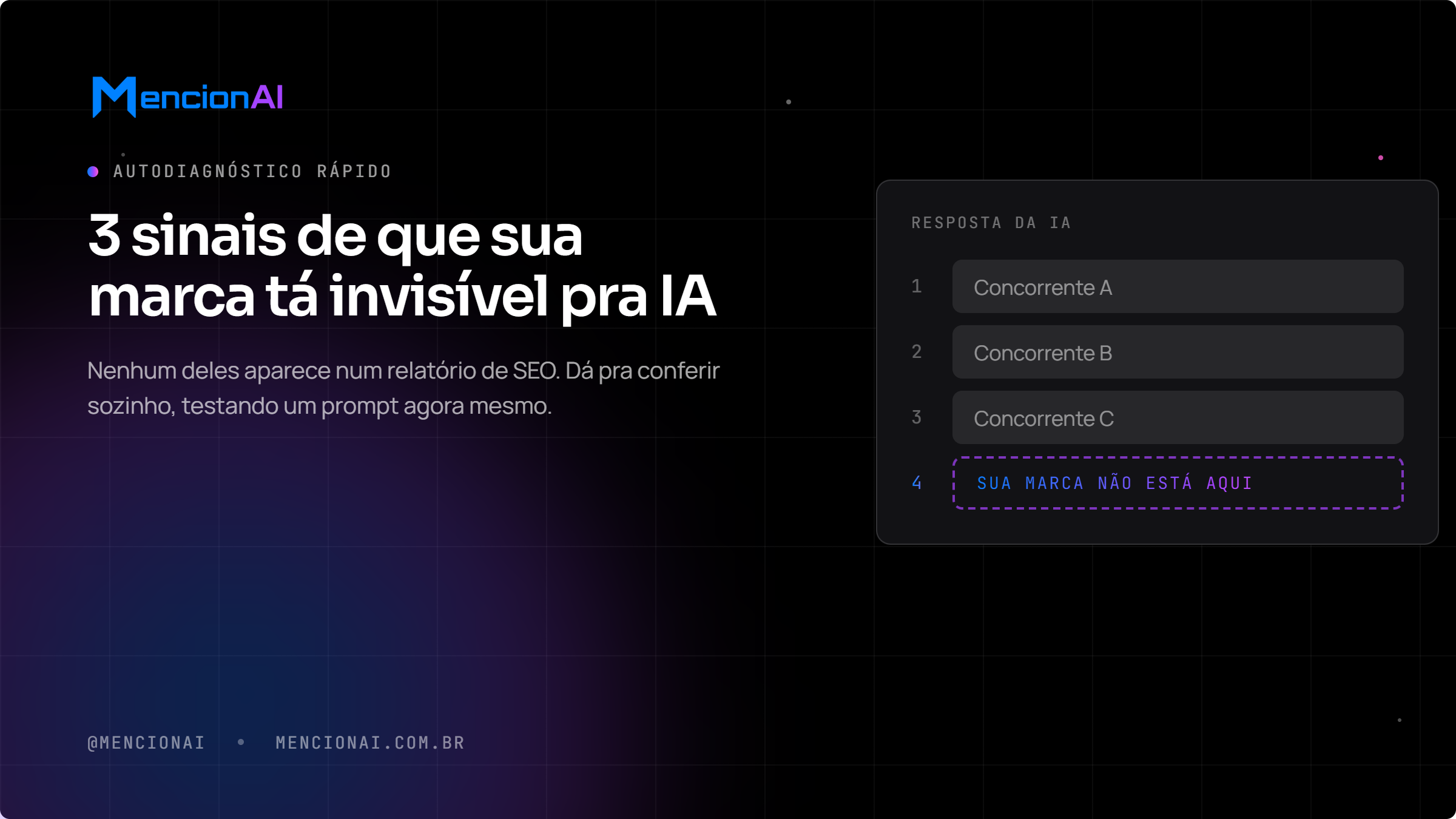
The problem is not just technical. When AI gets your brand wrong, it affects market perception, the sales team, and even investors. In an AI-driven discovery environment, reputation depends not only on what you publish, but on what systems can find, interpret, and cite.
Where these errors come from
Generative responses can be influenced by different layers of information:
Outdated public content
If your website, blog, documentation, social profiles, or partner pages are inconsistent, the model may combine old data with new data and generate an inaccurate response.
Low-quality third-party sources
Directories, marketplaces, forums, reviews, and older articles can be used as references by search engines and web-connected models. If these sources contain errors, they can be amplified.
Coverage gaps
When there is not enough information about a topic, AI tends to fill the gap with inference. This is especially common for smaller companies, niche B2B brands, or products with naming similar to competitors.
Ambiguous context
Generic names, broad categories, and vague descriptions increase the risk of confusion. AI may interpret your company as part of another category or assign it capabilities that belong to another player.
How to mitigate AI hallucinations in practice
The good news is that reputation in the generative era can be protected with strategy, monitoring, and editorial discipline. The goal is not to “control” AI, but to increase the chance that it finds, understands, and repeats the truth about your brand.
1. Create a clear source of truth
Your website needs to answer, in a straightforward way, the questions that AI and users ask most often:
- who you are;
- what the product does;
- who it is for;
- which integrations it offers;
- which use cases it solves;
- how it stands apart.
This information should live on public, indexable, and up-to-date pages. The clearer your positioning, the lower the chance of misinterpretation.
2. Standardize information across all channels
Consistency is a powerful defense against hallucinations. Check whether company description, categories, pricing, product naming, logo, founding year, and main claims are the same across:
- corporate website;
- blog;
- help center;
- LinkedIn;
- directory profiles;
- partner pages;
- PR materials.
Small differences may seem irrelevant to humans, but they are a signal of ambiguity to automated systems.
3. Strengthen your presence in citable sources
Generative models tend to trust content that shows structure, clarity, and authority. That includes:
- well-written educational articles;
- comparison pages;
- technical documentation;
- case studies;
- FAQ pages;
- mentions in relevant publications and communities.
In the GEO world, publishing more is not enough. You need to publish content that answers real questions and has a chance of being used as a reference.
4. Monitor what AI is saying about your brand
Reputation management now needs to include monitoring answers generated by AI assistants and AI search engines. This helps identify:
- factual errors;
- incorrect citations;
- competitors showing up instead of you;
- shifts in response tone;
- missing mentions in important queries.
With this kind of radar, your team can act before incorrect information becomes entrenched.
5. Handle fixes with editorial and technical priority
When a hallucination is found, the fix usually involves three fronts:
- correcting the information at the primary source;
- reinforcing the correct version in secondary channels;
- updating metadata, schema, support pages, and related content.
In some cases, it is also worth reviewing titles, headings, and cited entities to make the context less ambiguous. Semantic clarity helps both search engines and AI models.
The role of GEO in reputation protection
Generative Engine Optimization is not just about gaining visibility. It is about guiding systems so they understand your brand the right way. That means increasing the likelihood of citation, improving the quality of associated sources, and reducing room for incorrect inference.
In practice, a well-executed GEO strategy helps your company:
- appear in the right answers;
- be cited with accurate context;
- reduce confusion with competitors;
- build authority around key topics;
- maintain consistency across search, AI, and corporate communications.
In other words: GEO is a layer of reputation defense in the generative environment.
A continuous process, not a one-time project
Mitigating AI hallucinations is not the job of a single campaign. It is an ongoing process of content governance, citation monitoring, and fine-tuning your digital presence.
The best-positioned brands will be the ones that:
- keep their narrative up to date;
- treat brand data as critical assets;
- watch how models describe their products;
- fix inconsistencies quickly;
- invest in authority and topic coverage.
In a setting where the first impression may come from a generated answer, reputation is also information infrastructure.
Conclusion
The generative era requires a new mindset: your brand does not just need to be found, it needs to be interpreted correctly. AI hallucinations do not disappear on their own — they decrease when there is clarity, consistency, authority, and monitoring.
For marketing teams and founders, that means bringing reputation, content, and GEO into a single strategy. The better structured your digital presence is, the greater the chance that AI will tell the right story about your company.
FAQ
What is E-E-A-T and how does it help AI citations?
Google Search Central describes E-E-A-T as experience, expertise, authoritativeness, and trustworthiness — trust first. Named authors, first-hand experience, and citations to official docs help people judge who stands behind the page. Structured data is not required for AI Overviews, but Article, Person, and Organization markup still help Search understand the author and publisher.