
Beyond Keywords: How to Optimize Content for AI Understanding
MencionAI Blog Vinícius Guimarães de Oliveira
MencionAI Blog Apr 30, 2026 · 5 min read / SEO
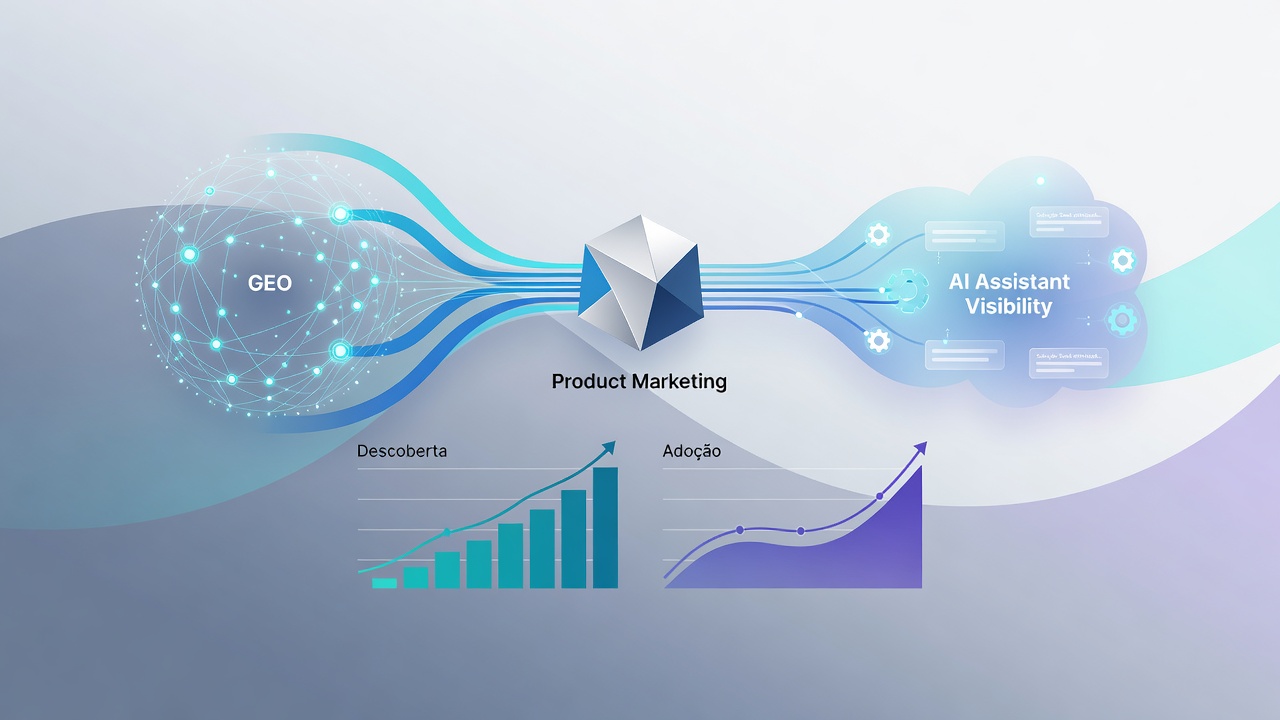
AI does not “read” content like a human; it identifies patterns, entities, context, and semantic relationships. To increase your visibility in AI answers and generative engines, go beyond keywords: organize content better, answer questions clearly, use consistent entities, cite trusted sources, and write for information retrieval.
Quick answer
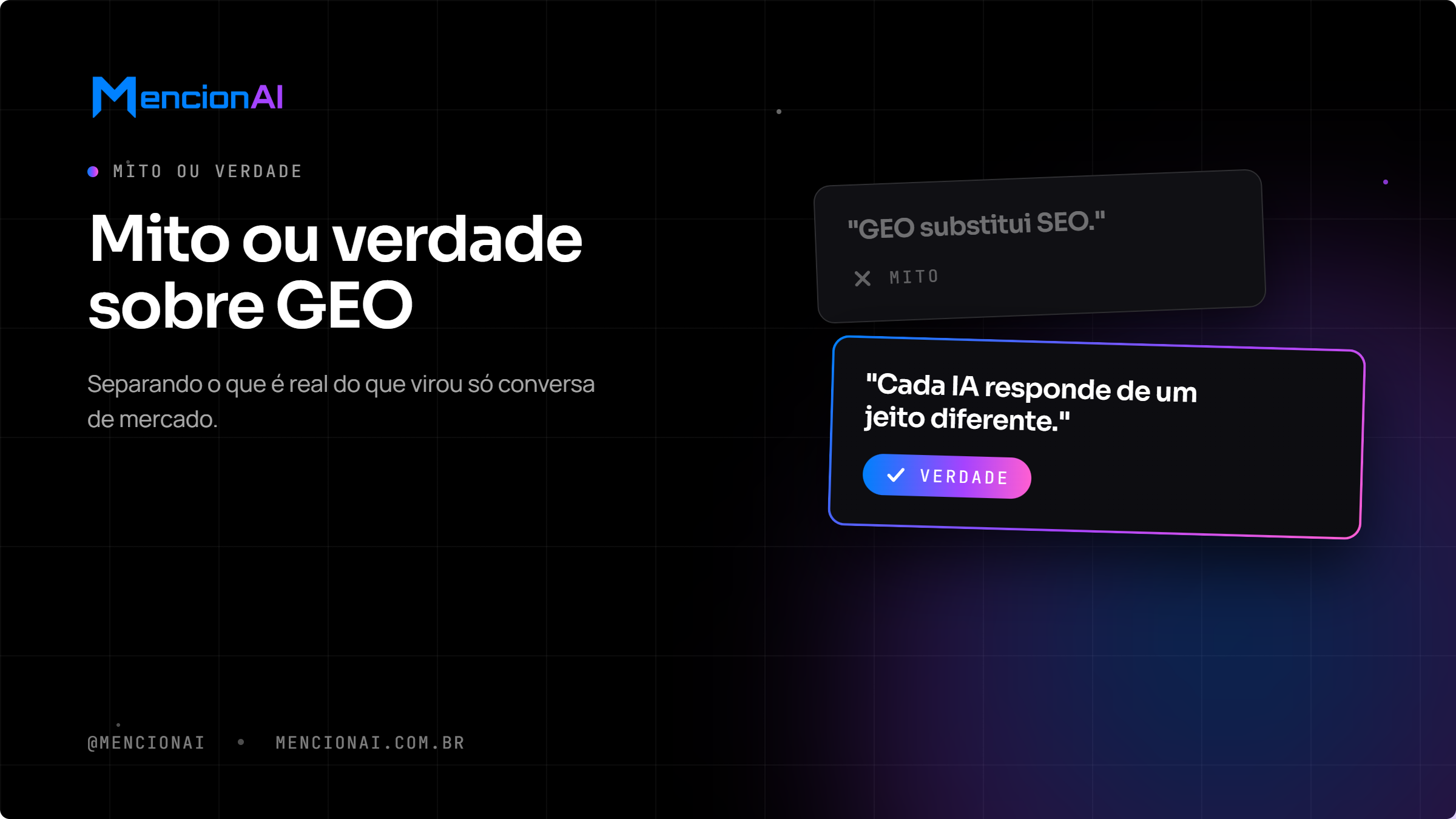
No. SEO ranks links on a results page. GEO measures whether your brand is cited inside AI answers on ChatGPT, Gemini, Claude, Perplexity, Grok, and DeepSeek.
Summary
- For a long time, SEO meant choosing the right keyword, repeating variations, and trying to signal relevance to the search engine.
- Generative models work with semantic representations.
- A good GEO practice is to think in terms of “retrievability.
- To be better understood by generative systems, your content should consistently signal structure and relevance.
- A well-structured page increases the chances of being understood, indexed, and cited.
- Generative AI tends to value signals of trust.
The problem with keyword obsession
For a long time, SEO meant choosing the right keyword, repeating variations, and trying to signal relevance to the search engine. That still matters, but it is not enough in a landscape where AI assistants and generative engines need to interpret intent, compare sources, and build answers.
Instead of simply “matching terms,” AI tries to understand:
- what the page’s main topic is;
- which entities are involved;
- how ideas connect;
- whether the content is trustworthy, current, and specific;
- whether it answers a question in a useful way.
In other words: content optimized for AI needs to be more explicit, more structured, and easier to retrieve.
How AI interprets content
Generative models work with semantic representations. In practice, this means they recognize context and relationships between concepts, not just exact terms.
That changes the optimization logic. Strong AI-friendly content tends to have:
- semantic clarity: one main idea per section;
- well-defined entities: brands, tools, roles, metrics, and categories named consistently;
- predictable structure: headings, subheadings, and short blocks;
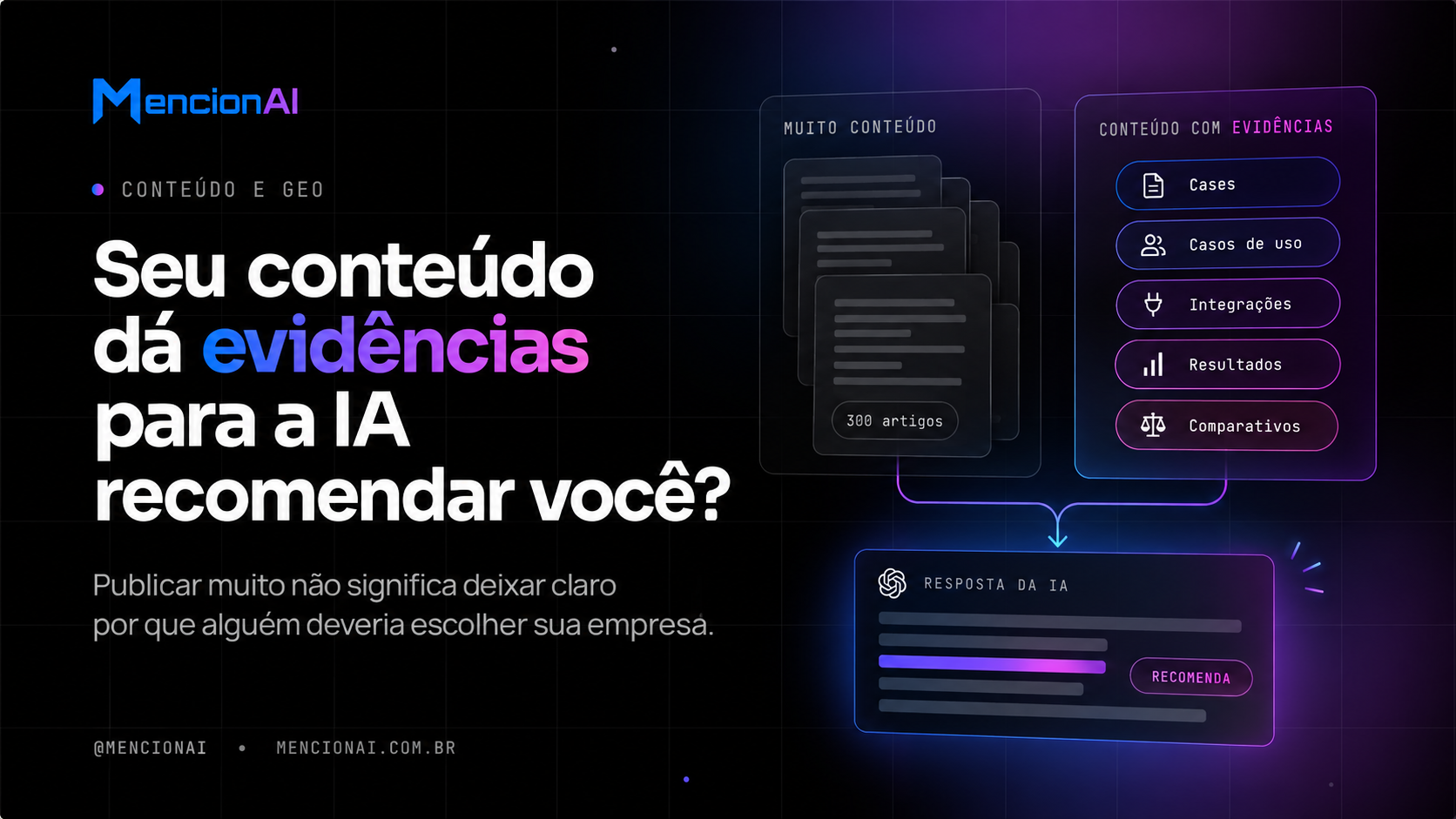
- proof and references: data, examples, and sources;
- direct answers: sentences that resolve doubts without unnecessary detail.
If your text relies too much on inference, AI may partially understand it — but it will have less confidence to cite or summarize your content.
Write for retrieval, not just for reading
A good GEO practice is to think in terms of “retrievability.” If a model needs to find your answer among many pages, the content should make that process easier.
Here are some ways to do that:
1. Start with the answer
Open each section with the main conclusion. Then explain, detail, and expand.
Example:
The best way to optimize content for AI is to structure information into clear blocks, with definitions, examples, and consistent entities.
This approach helps both the reader and the AI system quickly identify the central point.
2. Use questions as subheadings
Question-style subheadings reflect search intent and make it easier for AI to map the content.
Instead of “Structure,” prefer:
- “How do you structure content for AI?”
- “Which signals improve semantic understanding?”
- “How do you make a page more citable by assistants?”
3. Reduce ambiguity
Avoid vague terms without context. If you mention a “platform,” specify which one. If you mention a “result,” say which metric. If you refer to “improvement,” define whether it is traffic, conversion, citations, or accuracy.
AI favors texts where relationships are explicit.
Elements that improve AI understanding
To be better understood by generative systems, your content should consistently signal structure and relevance.
Clear entities
Use full and consistent names for companies, products, people, and concepts. This helps AI connect your content to a broader knowledge graph.
Operational context
Do not just say what something is. Explain when to use it, who it is for, what problems it solves, and what the practical outcome is.
Data and specificity
Numbers, dates, benchmarks, and concrete examples reduce misinterpretation.
Natural language, without too much jargon
Write in a human way, but be precise. Too much jargon can make inference harder; oversimplification can remove semantic signal.
Terminology consistency
Choose one primary term and use it consistently throughout the text. If you switch too much between synonyms, you may weaken the central topic.
Editorial structure that favors AI
A well-structured page increases the chances of being understood, indexed, and cited.
Use this model:
- short introduction with the problem and the promise;
- objective definition of the main concept;
- thematic blocks with H2 and H3;
- lists to break down complexity;
- practical examples;
- conclusion with a summary and next step.
This organization makes both human reading and automatic extraction of relevant passages easier.
GEO in practice: write to be cited
In Generative Engine Optimization, the goal is not just to rank. It is to appear as an answer, reference, or supporting source in AI systems.
That requires content that is:
- easy to interpret;
- easy to break into useful excerpts;
- rich in context;
- trustworthy enough to be reused.
Always ask yourself: if an AI needed to summarize this page in two sentences, would it find a clear answer? If it needed to cite a data point, would it be explicit? If it needed to identify the main topic, would there be strong enough signals?
Conclusion
Optimizing for AI does not mean abandoning keywords. It means going beyond them. The focus shifts from “how many times the term appears” to “how well the page communicates meaning, context, and trustworthiness.”
Anyone who wants to gain visibility in AI answers needs to build content that is understandable by machines and useful for people. In practice, that is a combination of structure, clarity, consistent entities, trusted sources, and well-addressed intent.
If you want to measure how your content is being perceived by assistants and generative engines, the next step is to track citations, presence in answers, and AI visibility signals — not just traditional rankings.
FAQ
Is GEO a replacement for SEO?
No. SEO ranks links on a results page. GEO measures whether your brand is cited inside AI answers on ChatGPT, Gemini, Claude, Perplexity, Grok, and DeepSeek.
What should we publish first for AI citations?
Comparison pages, FAQ hubs with stable anchors, llms.txt, and Organization schema — then re-scan the same prompts.
What is E-E-A-T and how does it help AI citations?
Google Search Central describes E-E-A-T as experience, expertise, authoritativeness, and trustworthiness — trust first. Named authors, first-hand experience, and citations to official docs help people judge who stands behind the page. Structured data is not required for AI Overviews, but Article, Person, and Organization markup still help Search understand the author and publisher.